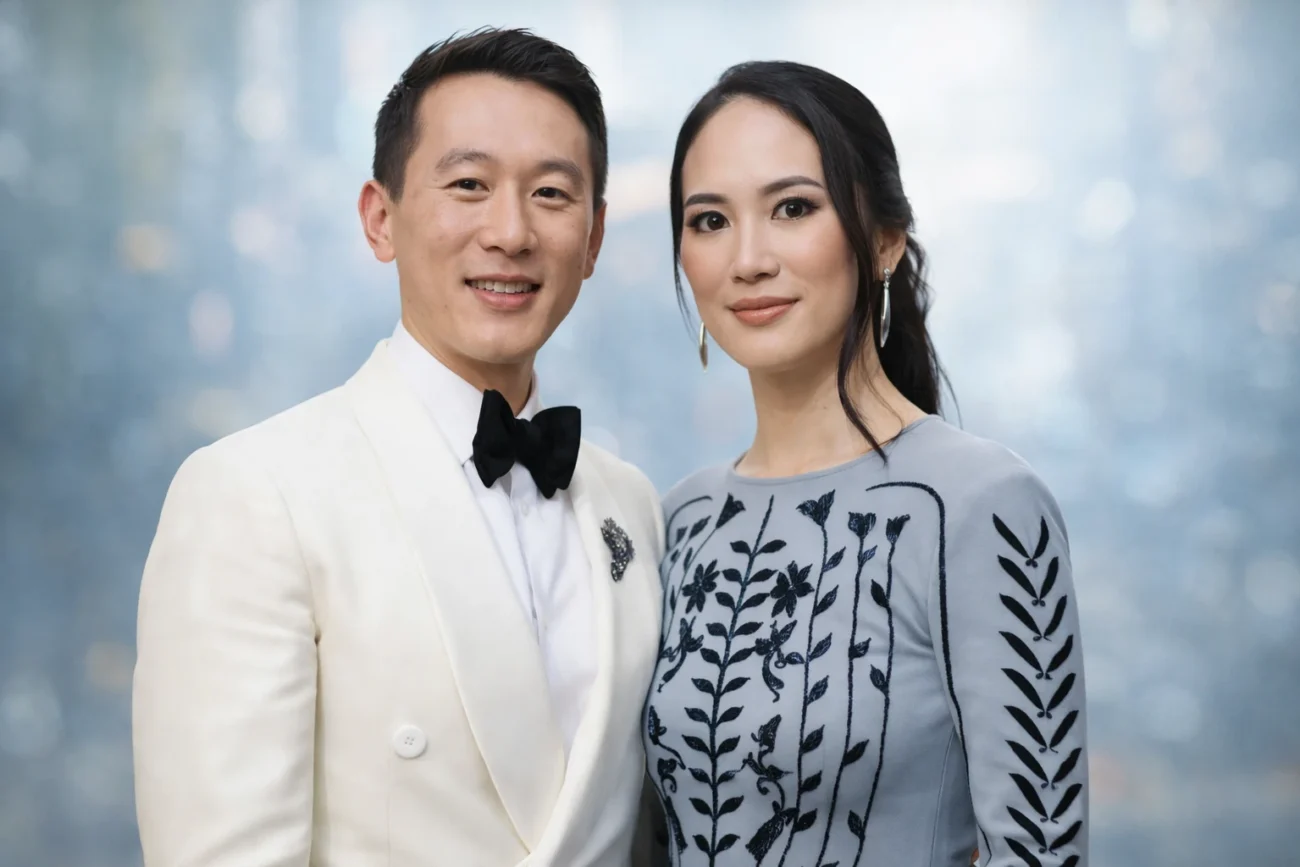
On March 23, 2023, when TikTok CEO Shou Zi Chew sat before U.S. lawmakers in a high-stakes congressional hearing, cameras captured a moment that would ripple far beyond Washington. As questions sharpened and political pressure mounted, attention quietly shifted toward the woman seated behind him—calm, composed, and largely unknown to the public. Her name was Vivian Kao, and within hours, curiosity about her surged worldwide.
That surge revealed something unusual. Unlike many figures suddenly pulled into global attention, Vivian Kao had not built a public persona. She had built a career. The more closely one looks, the clearer it becomes that she is not simply a supporting character in someone else’s story, but a business executive, investor, and institutional figure in her own right—one whose life sits at the intersection of finance, technology, and private capital, yet remains deliberately out of the spotlight.
Early Life and Background
Vivian Kao’s early life is not extensively documented in public records, and that absence is itself telling. Unlike celebrities or political figures, she has never cultivated a personal narrative for public consumption. What can be confirmed is that she pursued a path shaped by strong academic foundations and an early interest in global economics and culture.
She attended Wellesley College, one of the most selective liberal arts colleges in the United States, graduating in 2004 with honors. Her degree combined economics and Chinese studies, a pairing that reflects a practical awareness of global markets alongside cultural fluency. Even at that stage, her academic choices hinted at a future that would move across borders rather than remain confined to a single national context.
From there, she went on to Harvard Business School, one of the world’s most competitive MBA programs. The decision placed her among peers who would go on to lead major companies, shape financial institutions, and influence global industries. It also set the stage for one of the most frequently mentioned aspects of her personal life: it is widely reported that she met Shou Zi Chew during her time at Harvard, though the details of their early relationship have remained largely private.
A Career That Started in Finance
Like many graduates of elite business schools, Vivian Kao began her career in investment banking. She worked at Goldman Sachs, one of the most influential financial institutions in the world, where young professionals are often trained in high-pressure dealmaking, financial modeling, and global market analysis.
That experience matters because it shaped the rest of her career. Investment banking is not just about transactions; it builds a mindset that blends analytical thinking with strategic decision-making. It also creates networks that often extend into venture capital, private equity, and corporate leadership. For Kao, it appears to have served as a launching point rather than a long-term destination.
What’s notable is that she did not remain in traditional finance. Instead, she moved into operating roles within technology-driven businesses, a transition that reflects a broader shift seen among many finance professionals in the past two decades. Rather than advising companies from the outside, she stepped inside them.
Moving Into Technology and Growth Roles
Vivian Kao’s professional trajectory took a significant turn when she entered the technology sector, particularly in Asia. She held a senior role at WeLab, a fintech company that has grown into one of the region’s more recognizable digital financial platforms. As Chief Growth Officer, she was involved in expanding the company’s reach and securing funding from investors.
Growth roles in fintech are not ceremonial positions. They often require balancing aggressive expansion with regulatory compliance, managing partnerships, and presenting the company’s strategy to investors. The available records suggest that Kao played a meaningful part in helping WeLab scale during a competitive period for digital financial services.
Before her time at WeLab, she served as General Manager of Chope, a restaurant reservation platform that operates across several Asian markets. That role placed her in charge of regional operations, requiring her to manage both consumer-facing services and business relationships with restaurants. It also meant navigating the complexities of different markets, each with its own cultural and economic dynamics.
These roles share a common thread. They are not about visibility; they are about execution. They involve building systems, expanding markets, and driving measurable outcomes. In that sense, they offer a clearer picture of her professional identity than the headlines that later brought her into public view.
Tamarind and the World of Private Investment
Today, Vivian Kao is most closely associated with Tamarind, a family office that manages a portfolio of investments. Public descriptions identify her as either the CEO of Tamarind Global or a principal of Tamarind, depending on the source. Both titles point to a leadership role in overseeing private capital.
Family offices are, by design, private. Unlike publicly listed companies, they are not required to disclose detailed financial information, and they often operate with a level of discretion that keeps them out of the media. That makes it difficult to assess the full scope of Tamarind’s activities, including the size of its portfolio or the specific industries it invests in.
But here’s the thing. The lack of detailed disclosure does not diminish the significance of the role. Managing a family office typically involves overseeing investments across multiple asset classes, from equities and real estate to venture capital and private deals. It also requires long-term planning, risk management, and strategic allocation of resources.
In Kao’s case, Tamarind appears to represent a shift from operating within companies to shaping investments across them. It reflects a progression that is common among experienced executives who move into capital management after building operational expertise.
Board Roles and Corporate Governance
Vivian Kao’s public footprint becomes clearer through her board positions, particularly her role at Sun Hung Kai & Co., a Hong Kong-listed investment firm. She joined the company as an Independent Non-Executive Director in 2021, a position that carries oversight responsibilities rather than day-to-day management duties.
Independent directors are expected to provide objective judgment, monitor risk, and ensure that a company’s leadership acts in the best interests of shareholders. Kao’s involvement in committees related to risk management and environmental, social, and governance (ESG) issues suggests that her expertise extends into areas that are increasingly central to modern corporate oversight.
Her tenure at Sun Hung Kai & Co. has not been static. In March 2026, the company announced that she would step down from the board at the conclusion of its annual general meeting in May 2026. The stated reason was to focus on personal commitments, a phrase that leaves room for interpretation but signals a shift in her professional focus.
That transition highlights something important. Board roles are often seen as markers of status, but they are also time-intensive and carry legal responsibilities. Stepping away from such a position can reflect a strategic decision about where to concentrate energy and influence.
Wellesley and Philanthropic Impact
If there is one area where Vivian Kao’s influence is both visible and publicly documented, it is her connection to Wellesley College. She serves as a member of the college’s board of trustees, a role that involves governance, strategic planning, and stewardship of the institution’s long-term direction.
Her involvement goes beyond governance. In 2025, Wellesley opened the Vivian A. Kao ’04 Health and Counseling Center, a facility designed to bring together health and mental wellness services for students. The center represents a significant investment in campus infrastructure and reflects a broader focus on student well-being.
What’s striking is how this aspect of her life contrasts with the public image that often surrounds her. While media attention tends to focus on appearances alongside her husband at high-profile events, her work with Wellesley points to a quieter form of influence—one that operates through institutions rather than headlines.
It also offers insight into her priorities. Supporting a health and counseling center suggests an interest in addressing the practical needs of students, particularly at a time when mental health has become a growing concern on college campuses.
Marriage to Shou Zi Chew
Vivian Kao’s marriage to Shou Zi Chew is one of the most widely discussed aspects of her life, largely because of Chew’s role as CEO of TikTok. Their relationship has been described as a partnership formed during their time at Harvard Business School, though the couple has kept the details of their early years private.
They have children, but even here, public reporting is inconsistent. Some sources say they have two children, while others report three. The discrepancy reflects the broader challenge of writing about figures who maintain a strong boundary between public and private life.
What is clear is that their marriage places Kao in proximity to one of the most scrutinized companies in the world. TikTok has been at the center of debates about data privacy, national security, and global technology competition. During Chew’s congressional testimony, Kao’s presence underscored the personal dimension of those high-stakes discussions.
Yet she has not sought to leverage that visibility. Unlike many spouses of high-profile executives, she has not built a public brand around her relationship. Instead, she has continued to focus on her own professional and institutional roles.
Public Image and Media Attention
Vivian Kao’s public image is shaped less by her own actions than by the contexts in which she appears. When she attends events like the Met Gala or sits behind her husband during a congressional hearing, she becomes part of a larger narrative that is not entirely her own.
The truth is, she occupies an unusual space. She is both visible and private, recognizable yet not widely understood. This duality has led to a wave of online content that often fills gaps in knowledge with speculation.
Many websites present detailed biographies that include precise figures for her net worth, exact personal timelines, and intimate family details. But these claims rarely cite primary sources. In contrast, the most reliable information about her comes from institutional records—board filings, university pages, and official announcements.
This gap between perception and documentation is a defining feature of her public image. It reflects a broader pattern in how the internet handles figures who are connected to power but do not actively seek attention.
Financial Standing and Net Worth
One of the most common questions about Vivian Kao concerns her net worth. The honest answer is that there is no publicly confirmed figure. While she is associated with a family office and has held senior roles in finance and technology, the details of her personal wealth are not disclosed in accessible public records.
Estimates that circulate online should be treated with caution. Without verified financial disclosures, such figures are speculative at best. What can be said is that her career places her within circles where significant capital is managed and invested, but that does not translate directly into a publicly measurable personal fortune.
This ambiguity is not unusual for individuals involved in private investment. Unlike publicly traded company executives, they are not required to reveal compensation or holdings in detail. As a result, their financial standing often remains opaque.
Where Vivian Kao Is Now
As of 2026, Vivian Kao remains active in several areas. She continues to serve as a trustee at Wellesley College, with a term that extends through 2028. Her association with Tamarind also appears to remain central to her professional life, though the specifics of that work are not publicly detailed.
Her upcoming departure from the board of Sun Hung Kai & Co. marks a notable change. It suggests a shift in focus, though the direction of that shift is not yet clear. Whether it leads to new ventures, deeper involvement in existing ones, or a greater emphasis on personal commitments remains to be seen.
What is certain is that she has maintained a consistent approach to visibility. Even as her name has become more widely recognized, she has not altered her public presence to match that recognition. She remains, in many ways, an executive who operates behind the scenes.
Frequently Asked Questions
Who is Vivian Kao?
Vivian Kao is a business executive, investor, and trustee known for her roles in finance, technology, and private investment. She has worked at Goldman Sachs, held leadership positions at WeLab and Chope, and is associated with Tamarind, a family office. She is also widely known as the wife of TikTok CEO Shou Zi Chew.
What does Vivian Kao do professionally?
She is involved in investment management through Tamarind and has previously held senior operating roles in technology companies. Her career spans finance, fintech, and corporate governance, with experience in both execution and oversight.
Where did Vivian Kao study?
She graduated from Wellesley College in 2004 with a degree in economics and Chinese studies. She later earned an MBA from Harvard Business School, where she reportedly met her husband.
Is Vivian Kao still on the Sun Hung Kai & Co. board?
As of early 2026, she remains on the board, but she has announced that she will step down at the company’s annual general meeting in May 2026.
How many children does Vivian Kao have?
Public reports differ on this detail. Some sources say she has two children, while others say three. The family keeps their personal life private, and there is no single confirmed public record.
What is Vivian Kao’s net worth?
There is no verified public figure for her net worth. Estimates found online are speculative and not supported by confirmed financial disclosures.
Conclusion
Vivian Kao’s story is not one of sudden fame or carefully constructed public identity. It is the story of a professional life built through education, experience, and steady progression across industries that rarely draw headlines. Her visibility has come largely through association, but her career stands independently of that connection.
What makes her interesting is not what is known, but how much is intentionally not known. In an era where personal branding often accompanies professional success, she represents a different model—one that values discretion as much as achievement.
Her path also reflects a broader shift in global business. The lines between finance, technology, and investment are increasingly blurred, and her career has moved across all three. That movement suggests adaptability and a willingness to operate in spaces that demand both analytical skill and strategic judgment.
As her public profile continues to evolve, one thing remains consistent. Vivian Kao has chosen to let her work speak louder than her visibility. For readers trying to understand who she is, that choice may be the most revealing detail of all.
