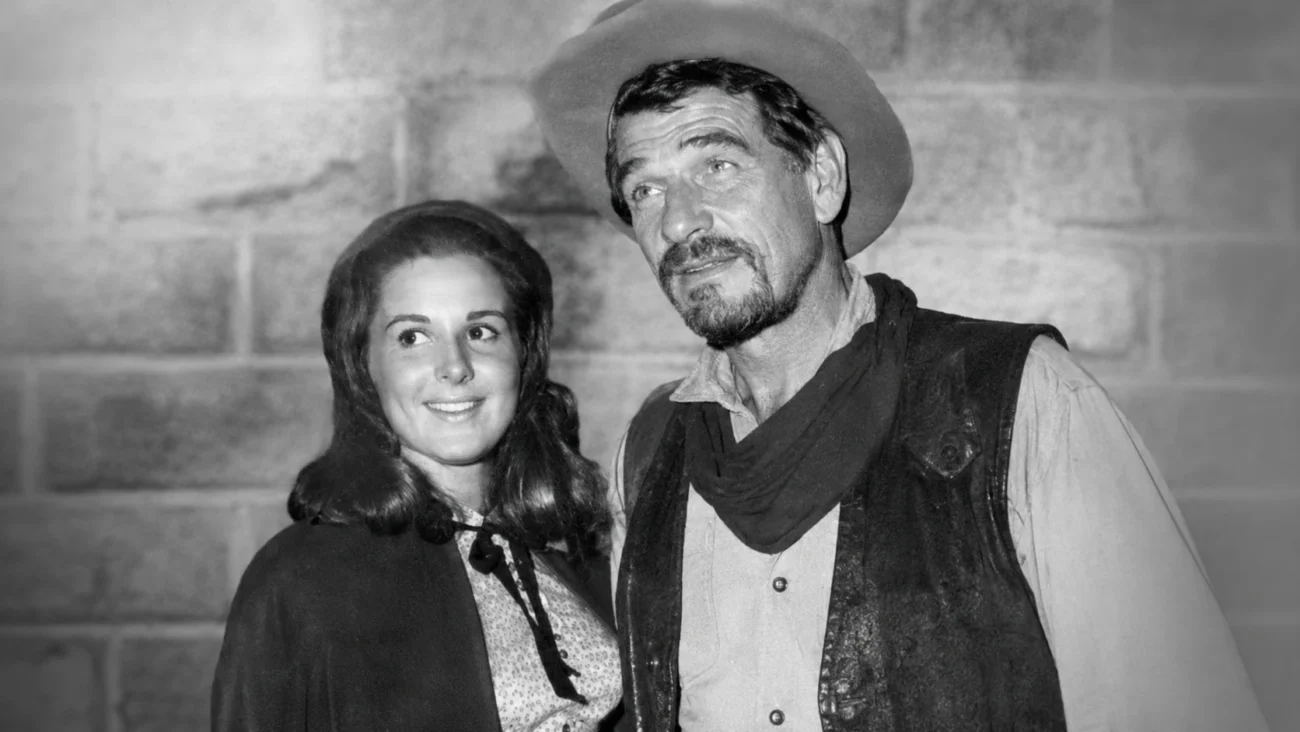
Jenny Lee Arness lived close to one of the most recognizable faces in American television history, yet very little about her own life ever became public. She was the daughter of James Arness, the towering actor who played Marshal Matt Dillon on Gunsmoke for two decades, and her story has remained largely hidden behind the enormous shadow of her father’s fame. That mystery is part of why people continue searching for her name decades after her death.
Unlike many celebrity children who built careers in entertainment or became fixtures in Hollywood coverage, Jenny Lee Arness left behind only fragments of a public record. There were a pair of television appearances, a famous family, and then a tragedy that shaped the private life of one of television’s most admired actors. The available facts are limited, but they still paint the outline of a young woman whose life unfolded inside a family marked by fame, pressure, distance, and loss.
Her story also reveals something about old Hollywood that modern celebrity culture sometimes forgets. During the height of television’s studio era, stars like James Arness often guarded their personal lives fiercely. Family struggles stayed out of the press whenever possible, and children were rarely treated as public personalities unless they actively entered the business themselves. Jenny Lee Arness remained mostly outside that spotlight, even though curiosity about her has only grown with time.
Early Life and Family Background
Jenny Lee Arness was born on May 23, 1950, in Los Angeles, California. Public records sometimes list her surname as “Aurness,” which reflected the family’s original spelling before James Arness adopted the professional version of the name for his acting career. Her parents were actor James Arness and actress Virginia Chapman, who married in 1948 during the early years of Arness’s Hollywood rise.
The Arness household already carried unusual pressures by the time Jenny was born. James Arness had served in World War II and suffered severe leg injuries during combat in Italy. After returning home, he moved into acting, eventually catching the attention of Hollywood producers because of his towering 6-foot-7 frame and commanding screen presence. Before Gunsmoke made him a television institution, he spent years appearing in westerns and supporting film roles.
Virginia Chapman came from a theatrical background herself. She studied acting at the Pasadena Playhouse, one of the most respected training grounds for young performers in mid-century Hollywood. Friends and colleagues described her as talented and ambitious, though her life later became troubled by emotional and personal difficulties that affected the entire family.
Jenny grew up with two brothers. One was Rolf Aurness, who later became known in the surfing world after winning the 1970 World Surfing Championship. The other was Craig Aurness, James Arness’s adopted son from Virginia Chapman’s earlier marriage. The children spent much of their youth around the entertainment industry, though James Arness generally tried to keep family life away from public attention.
Growing Up During the Rise of Gunsmoke
Everything changed for the family in 1955 when Gunsmoke premiered on CBS. The western quickly became one of the defining television programs of its era, turning James Arness into a household name across the United States. As Marshal Matt Dillon, he projected steadiness, authority, and moral certainty to millions of viewers every week.
Behind the scenes, though, the pace and demands of television production created strains inside the household. Gunsmoke required long filming schedules and intense public attention at a time when television fame was still relatively new. James Arness became closely identified with his screen character, and audiences often blurred the line between actor and role.
Jenny spent her childhood inside that unusual environment. She was raised in Los Angeles during the golden age of television, surrounded by industry figures while also living inside a family that valued privacy. Unlike modern celebrity families that appear constantly in magazines and online coverage, the Arness family largely stayed out of entertainment journalism unless professional work required publicity.
But privacy did not mean stability. Reports published years later indicated that the marriage between James Arness and Virginia Chapman deteriorated during the late 1950s and early 1960s. Divorce proceedings eventually followed, and custody disputes reportedly became part of the separation. These issues remained mostly shielded from public view at the time, which reflected the media culture of that era.
Jenny Lee Arness and Her Acting Credits
Jenny Lee Arness never built a full acting career, but she did briefly appear on Gunsmoke. Those appearances remain the only verified screen credits publicly tied to her name. In 1964, she appeared in the episode “The Glory and the Mud,” playing a character named Amy. Later that same year, she appeared in another episode titled “Aunt Thede,” where she played Laurie.
These were not major starring performances, but they placed her directly inside the world that defined her father’s life. For viewers revisiting the series decades later, the credits now carry emotional weight because they represent one of the few surviving public traces of Jenny herself. Her appearances also reflected a common television practice of the time, when relatives of cast members occasionally appeared in guest roles.
What’s surprising is how limited her acting record remained after those episodes. There is no evidence that Jenny Lee Arness pursued a long-term Hollywood career, signed major contracts, or became professionally active in film and television beyond those appearances. That absence has led some later writers to exaggerate her acting background, but the verified record remains brief.
Even so, appearing on Gunsmoke during its peak years was still meaningful. The show dominated American television for two decades and became one of the most influential western series ever produced. Guest appearances on the program reached enormous audiences, and even small roles became part of television history because of the show’s cultural reach.
Life Inside a Famous but Private Household
James Arness developed a reputation in Hollywood as one of the industry’s most private stars. Unlike many television celebrities of the period, he rarely embraced heavy publicity campaigns or cultivated a glamorous off-screen image. Colleagues often described him as reserved, outdoors-oriented, and uncomfortable with excessive celebrity culture.
That attitude shaped family life as well. The Arness children were not regularly pushed into magazine features or Hollywood social scenes. Jenny grew up during an era when stars could still maintain meaningful separation between public fame and private family matters. There were no social media accounts, paparazzi culture was far less aggressive than it would become decades later, and many celebrity children remained largely unknown outside entertainment circles.
Still, fame created pressures of its own. James Arness’s public image as Matt Dillon projected strength and certainty, but maintaining that image while navigating personal difficulties could not have been easy. Reports from later years suggested that family tensions, emotional struggles, and periods of instability affected several members of the household.
Jenny’s mother, Virginia Chapman, reportedly struggled with alcoholism and emotional difficulties during parts of her later life. While some online biographies present dramatic claims about the family’s private conflicts, much of that material lacks strong sourcing. The reliable public record confirms that the marriage ended in divorce and that the family experienced serious hardships, but many personal details remain unclear or disputed.
The Difficult Years After Her Parents’ Divorce
By the early 1960s, Jenny Lee Arness was entering adolescence while her parents’ marriage unraveled publicly through divorce proceedings. Court records and later reporting confirmed that James Arness eventually received custody of the children. That situation was somewhat unusual for the period, especially during an era when mothers more commonly received primary custody after divorce.
The separation appears to have deeply affected the family dynamic. James Arness continued working constantly on Gunsmoke, while Virginia Chapman’s personal struggles reportedly worsened after the marriage ended. The children were left navigating an emotionally difficult period while also carrying the visibility that came with their father’s fame.
Not many people know this, but James Arness himself spoke very little publicly about these years. He rarely discussed his family in interviews, and when he did, he generally avoided personal detail. Friends later described him as deeply protective of his children and reluctant to expose family matters to the press.
For Jenny, these years coincided with a stage of life already filled with pressure and change. Adolescence inside a fractured celebrity household could not have been simple, especially during an era when mental health conversations remained limited and emotional struggles were often kept private.
Her Relationship With James Arness
Public information about Jenny Lee Arness’s personal relationship with her father remains limited. James Arness guarded family matters closely throughout his life, and Jenny herself never became a public interview subject. As a result, many later accounts rely heavily on interpretation rather than direct evidence.
What can be said with confidence is that James Arness experienced profound personal losses during his lifetime, and Jenny’s death became one of the defining tragedies of his private life. Friends and associates later described him as emotionally affected by the losses within his family, even though he rarely addressed them publicly.
The contrast between James Arness’s screen persona and his personal experiences often fascinates readers today. On television, he represented calm leadership and moral certainty for twenty years. Off screen, he dealt with divorce, grief, addiction-related family struggles, and the loss of children. That divide between public image and private pain gives Jenny’s story additional emotional resonance.
There is also evidence that James Arness remained closely connected to his children despite the demands of his career. His son Rolf later spoke publicly about surfing and family experiences, and James maintained relationships with surviving relatives throughout his later years. But because Jenny died young and left behind almost no public interviews or personal writings, much about her relationship with her father remains private.
The Tragedy of Jenny Lee Arness’s Death
Jenny Lee Arness died on May 12, 1975, in Malibu, California. She was 24 years old and only days away from her 25th birthday. Later obituary reporting connected her death to suicide or an intentional drug overdose, though public details remained limited.
The truth is, very little official information about her death was ever widely released. Unlike modern celebrity tragedies that become subjects of nonstop media coverage, Jenny’s death unfolded during a period when many family crises remained largely private. James Arness did not publicly discuss the loss in depth, and mainstream entertainment coverage of the time treated family tragedies with more restraint than celebrity journalism often does today.
Her death occurred during the final year of Gunsmoke’s original television run, adding another layer of emotional complexity to that period in the Arness family’s life. While James Arness continued working professionally, his private world had been deeply shaken.
Two years later, Jenny’s mother Virginia Chapman also died from a drug overdose that authorities reportedly considered accidental. Those back-to-back losses became part of the painful family history surrounding James Arness’s later years, though he continued to avoid discussing them publicly whenever possible.
Why Interest in Jenny Lee Arness Continues
People continue searching for Jenny Lee Arness decades after her death partly because her story feels unfinished. She occupies a strange space in celebrity history: connected to one of television’s most famous actors, briefly visible through Gunsmoke, and then largely absent from public life before dying young.
Modern internet culture has intensified that curiosity. As old television shows found new audiences through streaming services and digital archives, viewers became increasingly interested in the private lives of classic television stars. James Arness’s career remains closely tied to American television history, which naturally leads people toward questions about his family.
But here’s the thing. The limited amount of reliable information has also allowed myths and unsupported claims to spread online. Many websites recycle unsourced stories about Jenny’s emotional life, relationships, education, or personality without verifying the information. Some even present speculation as established fact.
A careful reading of the available evidence paints a quieter and more restrained picture. Jenny Lee Arness was not a major celebrity in her own right. She was a young woman connected to a famous family, briefly involved in television work, and later remembered because of the tragedy of her early death. That reality may sound less dramatic than many online retellings, but it is also more honest.
The Arness Family Legacy
James Arness remained a towering figure in television history long after Gunsmoke ended in 1975. He reprised the role of Matt Dillon in several television movies during the late 1980s and early 1990s, introducing the character to newer audiences. His image became permanently tied to the classic American western.
The family legacy extended beyond acting as well. Rolf Aurness became one of the most respected surfers of his generation after winning the world surfing title in 1970. Unlike his father, Rolf largely stayed connected to outdoor culture rather than Hollywood celebrity life.
James Arness married Janet Surtees in 1978, and the marriage lasted until his death in 2011. Friends often described Janet as a stabilizing presence during his later years. Even so, the earlier losses within the family remained part of the emotional history surrounding his life.
Jenny’s place inside that legacy remains unusual. She was never a major actress or public figure, yet her story continues appearing in biographies, fan discussions, and searches connected to James Arness. In many ways, she represents the hidden human side of old television fame — the private family experiences that existed behind iconic screen images.
Public Memory and Historical Perspective
The way Jenny Lee Arness is remembered today says as much about modern audiences as it does about her own life. Contemporary readers often search for emotional explanations, hidden family drama, or undiscovered Hollywood stories. But older entertainment histories do not always provide that kind of access.
Much of Jenny’s life existed outside the public record. There are no major interviews, memoirs, or public statements that fully explain who she was privately. That absence can frustrate modern readers accustomed to constant celebrity visibility, but it also reflects a different era of fame.
Writers covering stories like hers face an important challenge. It is easy to repeat dramatic claims from weak online sources, especially when a story includes celebrity, addiction, and tragedy. Responsible biography writing requires restraint, especially when the subject cannot speak for herself.
What remains clear is that Jenny Lee Arness’s life became inseparable from a larger American television story. Her father helped define the western hero for an entire generation, while her own brief public record became tied to the hidden costs of fame and family pressure.
Frequently Asked Questions
Who was Jenny Lee Arness?
Jenny Lee Arness was the daughter of actor James Arness and actress Virginia Chapman. She is best known for her connection to the Gunsmoke star and for making two guest appearances on the series during the 1960s. Her life remained largely private, and she died in 1975 at the age of 24.
Was Jenny Lee Arness an actress?
She appeared in two episodes of Gunsmoke in 1964, but there is no evidence that she pursued a major acting career afterward. Her screen record remained very limited compared with other celebrity children who entered Hollywood professionally.
How did Jenny Lee Arness die?
Public reporting from later years described her death as suicide or an intentional drug overdose. She died on May 12, 1975, in Malibu, California. Detailed official information about the circumstances was never widely released.
Who were Jenny Lee Arness’s parents?
Her parents were actor James Arness and actress Virginia Chapman. James Arness became famous worldwide for playing Marshal Matt Dillon on Gunsmoke, while Virginia Chapman worked as an actress before and during their marriage.
Did Jenny Lee Arness have siblings?
Yes. She had a brother, Rolf Aurness, who became a world champion surfer, and an adopted brother, Craig Aurness. The family remained connected to both entertainment and outdoor sports culture through different generations.
Why is Jenny Lee Arness still searched online?
Interest in her continues because of James Arness’s enduring popularity and the mystery surrounding her private life. Fans of Gunsmoke and classic television often search for information about the families of major stars, especially when a story involves tragedy or limited public records.
What was Jenny Lee Arness’s net worth?
There are no reliable public estimates of Jenny Lee Arness’s personal net worth. Since she did not maintain a substantial acting or business career, most online figures attached to her name appear speculative and unsupported by credible financial reporting.
Conclusion
Jenny Lee Arness remains a figure defined as much by absence as by public record. She left behind only brief television appearances and scattered references inside the larger history of her famous family. Yet those fragments continue drawing attention because they hint at a life lived close to enormous fame while remaining personally out of view.
Her story also reflects the hidden emotional realities behind classic Hollywood success. James Arness became one of television’s most admired western stars, but the stability viewers saw on screen did not protect his family from grief, divorce, addiction struggles, or loss. Jenny’s death became part of that difficult private history.
There is a temptation to turn stories like hers into myth or melodrama. The stronger approach is simpler and more respectful. Jenny Lee Arness was a real person whose life unfolded largely outside the public eye, and much about her remains unknown because her family valued privacy during a very different era of celebrity culture.
Even now, decades later, curiosity about Jenny Lee Arness continues because her story touches something timeless. It reminds readers that behind even the most iconic television image stands an ordinary family trying to survive extraordinary pressures. That tension between fame and private life still resonates long after the cameras stopped rolling on Gunsmoke.
