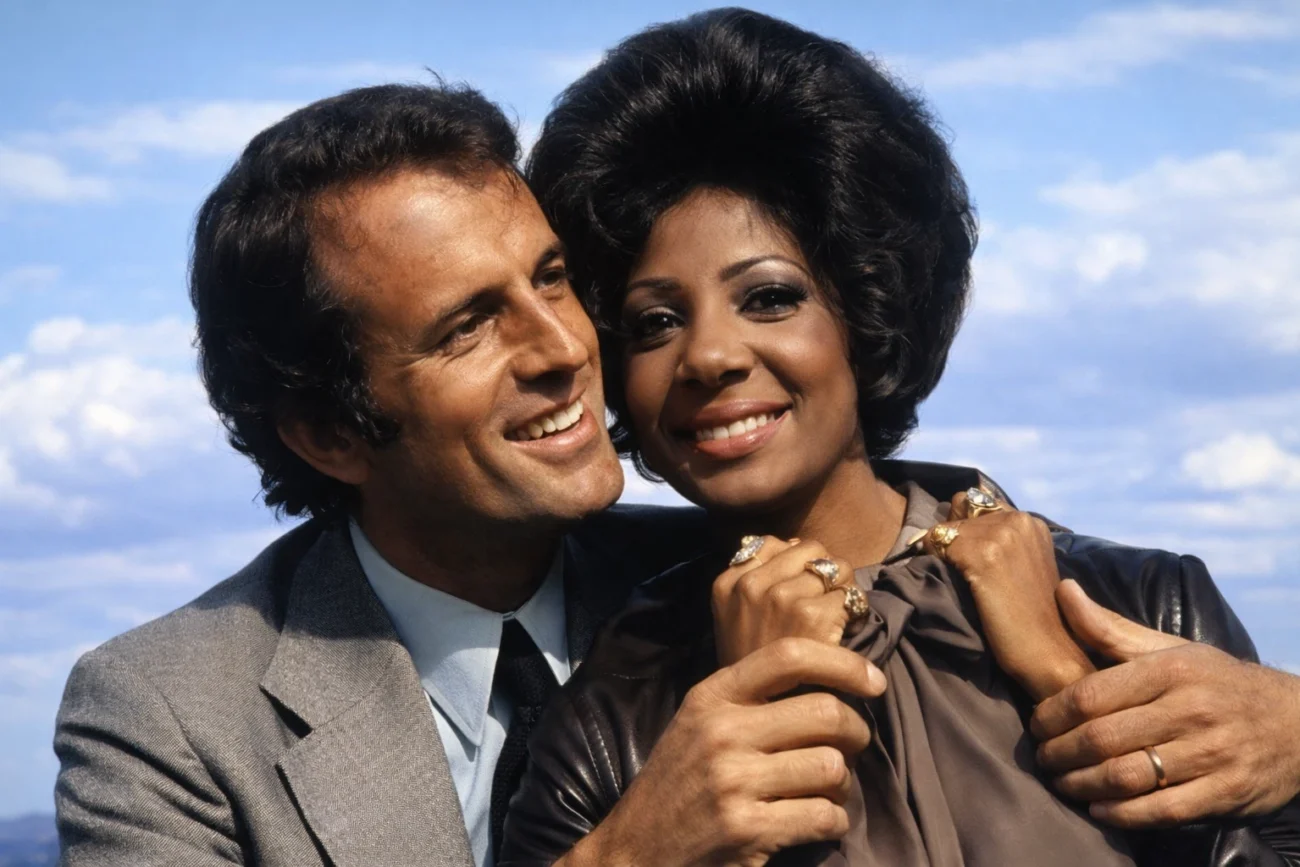
Sergio Novak never set out to be famous, and that may be the single most important fact about him. His name endures not because of a public career or a body of work, but because he stood beside one of the most recognizable voices in modern music: Dame Shirley Bassey. Their marriage, which began in Las Vegas in 1968 and ended just over a decade later, placed Novak in the orbit of international celebrity. Yet even during those years, he remained a largely private figure, defined more by proximity to fame than by any public persona of his own.
That tension—between visibility and obscurity—has shaped how Sergio Novak is remembered. He appears in photographs, captions, and family records, often identified as an Italian hotelier and later as Bassey’s manager. Beyond that, the record becomes fragmentary. The result is a life that can be traced in outline but not always filled in with the same detail as the star he married.
Early Life and Background
Reliable information about Sergio Novak’s early life is limited, and that scarcity defines any honest account of his biography. Public records and genealogical indexes suggest he was born in 1934, likely in Italy, but widely available documentation does not provide a detailed account of his childhood, education, or family background. Unlike many public figures, Novak did not leave behind interviews or autobiographical material that might clarify these early years.
What can be inferred, with reasonable confidence, is that Novak came from a background that allowed him to enter the hospitality industry at a professional level. By 1970, he was identified as the assistant manager of the Excelsior Hotel in Venice, a prestigious establishment known for hosting international guests. That role suggests a level of training, discipline, and social skill consistent with high-end hotel management, a field that often requires multilingual communication and a strong grasp of client relations.
Not many people know this, but the hospitality industry in mid-20th-century Europe could serve as a gateway into international networks of business and entertainment. Hotels like the Excelsior were not simply places to stay; they were hubs where performers, producers, and executives crossed paths. It is within this environment that Novak likely developed the connections and experience that would later intersect with the entertainment world.
Meeting Shirley Bassey
The details of how Sergio Novak met Shirley Bassey are not extensively documented, but the timing and context offer clues. By the late 1960s, Bassey was already an established star, known globally for her powerful voice and commanding stage presence. Her success with songs like “Goldfinger” had cemented her reputation, and she was a frequent performer in major entertainment centers, including Las Vegas.
Las Vegas in that era was more than a performance venue; it was a meeting point for entertainers, business figures, and international visitors. Novak’s work in hospitality would have placed him in similar environments, even if not in the same city at the outset. Their paths likely crossed within these overlapping professional circles, where access and introductions were part of daily life.
What is certain is that their relationship moved quickly into public view. On August 12, 1968, Shirley Bassey married Sergio Novak in Las Vegas. The setting was fitting for Bassey’s career at the time, as she was a regular performer in the city’s major venues. For Novak, the marriage marked a transition from relative anonymity into the public spotlight, though he never fully embraced that visibility.
Marriage and Family Life
The marriage between Sergio Novak and Shirley Bassey lasted from 1968 to 1979, a period that coincided with a significant phase in Bassey’s career. During these years, Novak was not only her husband but also widely described as her manager, a dual role that blended personal and professional responsibilities in a way that was both practical and complicated.
Their relationship unfolded largely in public view, at least in its early years. Photographs from the time show the couple attending events, traveling together, and appearing at major venues such as the Las Vegas Hilton. Reports from the mid-1970s suggested that Bassey remained deeply attached to Novak, reflecting a marriage that, at least outwardly, combined affection with shared purpose.
The family dynamic during this period adds another layer to Novak’s story. Shirley Bassey had children from previous relationships, including daughters Sharon and Samantha. Public records and media coverage later referred to Samantha using the surname Novak, indicating that Sergio Novak occupied a parental role within the household. Some accounts also suggest that the couple adopted Bassey’s grand-nephew, Mark, though detailed documentation of that arrangement is limited in widely accessible sources.
The truth is, Novak’s role within the family appears to have been significant, even if it was not extensively chronicled. He was present during years that shaped not only Bassey’s career but also her family life, and his surname became part of that history in a lasting way.
Managing a Global Star
Sergio Novak’s transition from hotel management to artist management is one of the most intriguing aspects of his biography. While the exact scope of his responsibilities is not fully documented, multiple sources describe him as Shirley Bassey’s manager during their marriage. That designation carries weight, particularly given the scale of Bassey’s career at the time.
The 1970s were a commercially successful period for Bassey. She released a series of albums that performed well on the UK charts, including Something (1970), Something Else (1971), and Never, Never, Never (1973). These records reinforced her status as a leading vocalist and kept her in regular demand for live performances and international tours.
Managing such a career would have required careful coordination of bookings, travel, publicity, and financial arrangements. It also meant navigating the pressures that come with sustained public attention. Novak’s background in hospitality may have prepared him for some of these challenges, particularly in terms of organization and client relations, but the transition into the music industry would still have been substantial.
Here’s where it gets interesting. The dual role of spouse and manager can create both trust and tension. On one hand, it allows for a close alignment of personal and professional goals. On the other, it can blur boundaries in ways that complicate decision-making. While the public record does not provide a detailed account of how Novak handled these challenges, the eventual end of the marriage suggests that the arrangement may not have been sustainable over the long term.
Divorce and Later Years
Sergio Novak and Shirley Bassey divorced in 1979, bringing an end to their eleven-year marriage. The reasons for the separation have not been extensively documented in reliable public sources, and accounts that attempt to explain the breakup often rely on speculation rather than confirmed reporting. As a result, the most responsible approach is to acknowledge the divorce without attributing it to specific causes.
After the divorce, Novak appears to have withdrawn from public life. Unlike some individuals who remain connected to the entertainment industry after a high-profile relationship, he did not establish a visible independent career in media or business that attracted ongoing attention. Mentions of him in later years are sparse and usually indirect.
One of the most significant public references to Novak after the divorce came through tragic circumstances. In 1985, Shirley Bassey’s daughter Samantha was found dead, and contemporary reports referred to her as Samantha Novak. This usage underscores the lasting connection between Novak and Bassey’s family, even after the marriage had ended.
Public records suggest that Sergio Novak died in 1989, though detailed reporting on his death is limited. Genealogical sources and repeated biographical references place his death in December of that year, but the absence of extensive coverage reflects the same pattern seen throughout his life: a presence acknowledged in passing rather than explored in depth.
Public Image and Legacy
Sergio Novak’s public image is unusual because it was never fully formed. He was known primarily through his association with Shirley Bassey, and even during their marriage, he did not cultivate a separate identity in the media. This has left him in a kind of historical shadow, visible but not fully illuminated.
That said, his role should not be dismissed as incidental. Being the manager of an international performer during a busy and successful period is not a minor responsibility. It involves logistical expertise, discretion, and the ability to operate under constant scrutiny. Novak’s background in hospitality may have given him a foundation for this work, but the demands of managing a global music career would have required additional adaptability.
The truth is, Novak represents a category of figures who are essential to the functioning of public careers but rarely receive sustained attention. They are the organizers, intermediaries, and partners who help maintain the structure behind the performance. Without them, the visible success of artists like Bassey would be much harder to sustain.
The Challenge of Writing About Sergio Novak
Writing about Sergio Novak highlights a broader issue in biographical work: the difference between what is known and what is often assumed. In an age where online content can quickly multiply, it is easy for unverified details to be repeated until they appear authoritative. Novak’s story is particularly vulnerable to this pattern because of the limited primary material available.
A careful biography must therefore resist the urge to fill gaps with conjecture. It must rely on verifiable facts, acknowledge uncertainty, and avoid presenting speculation as established truth. This approach may result in a less detailed narrative, but it is more accurate and more respectful of the historical record.
What’s surprising is how much can still be understood from the available evidence. Even with limited detail, it is possible to see the outlines of a life shaped by work, relationship, and circumstance. Novak’s story is not incomplete so much as it is restrained, offering glimpses rather than a full portrait.
Frequently Asked Questions
Who was Sergio Novak?
Sergio Novak was an Italian hotelier who became publicly known through his marriage to singer Shirley Bassey. He later served as her manager during a significant period of her career. Most of what is known about him comes from references connected to Bassey’s life and work.
When did Sergio Novak marry Shirley Bassey?
Sergio Novak married Shirley Bassey on August 12, 1968, in Las Vegas, Nevada. Their marriage lasted until 1979, spanning eleven years that included both personal and professional collaboration.
Did Sergio Novak have children?
There is no widely confirmed evidence that Sergio Novak had biological children with Shirley Bassey. However, he was part of a family that included Bassey’s daughters, and his surname was used by Samantha Novak in public records and media coverage.
What did Sergio Novak do for a living?
Sergio Novak worked in the hospitality industry and was identified as an assistant manager at the Excelsior Hotel in Venice. During his marriage to Shirley Bassey, he also served as her manager, overseeing aspects of her professional career.
Is Sergio Novak still alive?
Public records indicate that Sergio Novak died in 1989. While this date is widely cited in genealogical sources and biographies, detailed reporting on his death is limited.
Why is there so little information about Sergio Novak?
Sergio Novak was not a public figure in the traditional sense. He did not pursue a career in entertainment or media, and he left behind few interviews or personal records. As a result, most available information about him comes from his association with Shirley Bassey rather than from independent documentation.
Conclusion
Sergio Novak’s life resists the usual shape of a celebrity biography. There are no defining interviews, no major public statements, and no carefully constructed personal brand. Instead, there is a series of moments—his work in hospitality, his marriage to Shirley Bassey, his role as her manager—that together form a partial but meaningful record.
That record shows a man who moved between worlds. He began in the structured environment of high-end hotels and found himself managing the unpredictable demands of international entertainment. He lived within a family shaped by fame and carried a name that remained part of that story even after the marriage ended.
But here’s the thing. Novak’s legacy is not about visibility; it is about presence. He was there during a formative period in Bassey’s career, contributing in ways that were real even if they were not widely documented. His life reminds us that not every important figure leaves behind a detailed archive.
In the end, Sergio Novak is remembered not through a long list of achievements but through his connection to a larger narrative. He stands at the edge of a well-known story, offering just enough detail to be recognized and just enough absence to remain intriguing. That balance, more than anything else, is what keeps his name alive.
