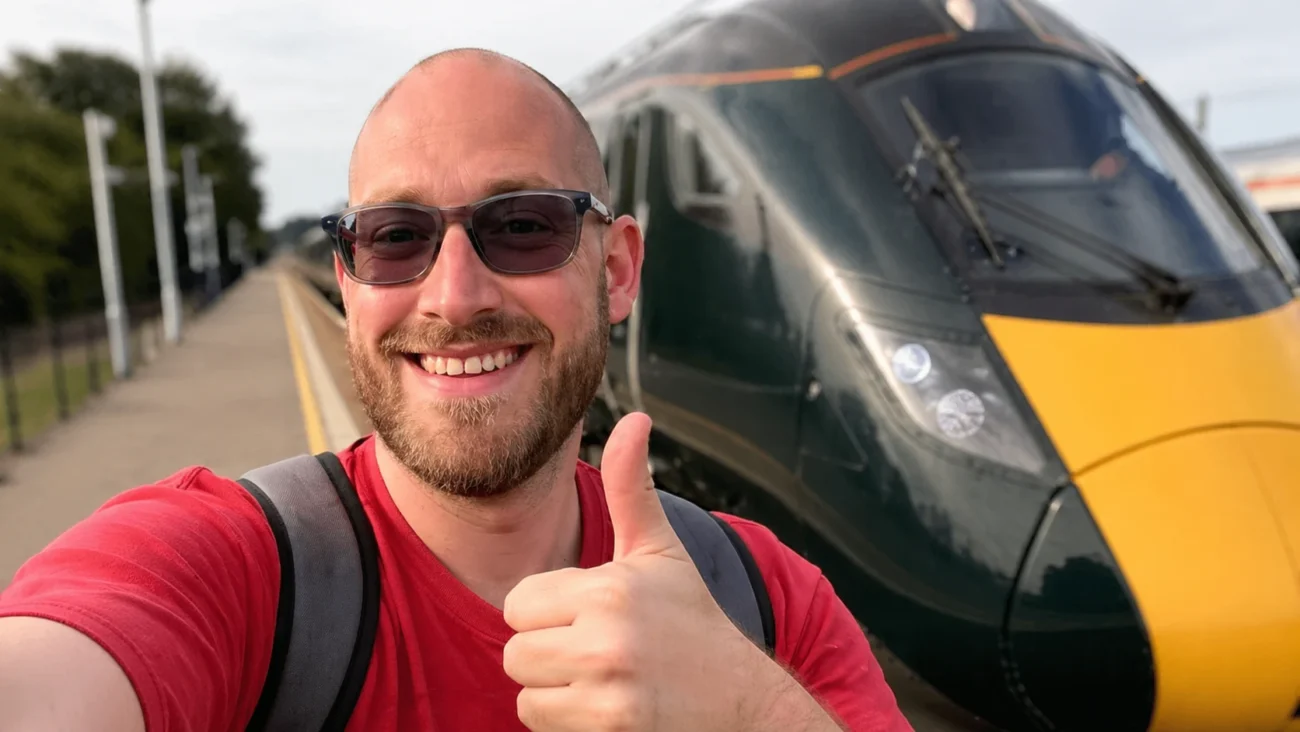
Ryan Windridge became known online for something simple: he loved trains, and he showed that love without embarrassment. From Gloucester railway spots to TikTok feeds and paid Cameo messages, his public image grew from the kind of enthusiasm that can’t easily be manufactured. He was not introduced to most viewers as an actor, athlete, or polished influencer, but as a local man whose excitement around trains felt direct, memorable, and unusually open.
That openness is the reason people keep searching his name. Ryan Windridge’s story sits at the meeting point of hobby culture, social media fame, neurodivergence, mental health, and the unpredictable world of internet attention. His biography is not a traditional celebrity story, but it tells us something about how ordinary passions can become public identity, and how quickly that identity can become difficult to manage.
Early Life and Gloucester Roots
Ryan Windridge is publicly associated with Gloucester, the cathedral city in southwest England where much of his trainspotting identity took shape. Public reporting has described him as a Gloucester-based train lover whose interest in railways began in childhood. He has said that his mother took him to see trains at a crossing when he was young, a small family memory that later became part of the explanation for his lifelong fascination.
Not much verified information is available about his wider family background, schools, or early private life. That absence matters, because internet biographies often fill gaps with confident guesses that do not hold up under scrutiny. The public record supports a more careful picture: Windridge grew up with a strong interest in trains, stayed closely connected to the Gloucester area, and built his adult public identity around that enthusiasm.
His early interests were not limited to passenger trains. In public interviews, he has spoken about liking trucks and Eddie Stobart vehicles as well, suggesting a broader attraction to transport, movement, routes, and machinery. That detail helps explain why his later content moved naturally between trains, trucks, food, daily routines, and short social videos rather than staying inside one narrow rail-specialist lane.
A Childhood Passion That Became a Public Identity
Trainspotting is often misunderstood by people outside the hobby. To many enthusiasts, it is not just about collecting numbers or watching vehicles pass by; it is about place, sound, routine, anticipation, and recognition. For Ryan Windridge, trains have been presented not only as a hobby but as a source of happiness and emotional steadiness.
His best-known public quote about trains described them as a kind of “natural medication.” That phrase became central to the way many people understood him, because it linked his hobby to mental health rather than treating it as a quirky pastime. It also gave viewers a clearer sense of why the videos mattered to him personally, not just why they might be entertaining to strangers online.
Gloucester and the surrounding railway locations gave that passion a real geography. Public reporting has connected him with spots such as Gloucester station, Haresfield, Barnwood, and areas around local roads and crossings. These places were not glamorous backdrops, but they gave his content the grounded feel of someone filming what he actually loved in the places he actually knew.
Mental Health, Autism, and Speaking Openly Online
Ryan Windridge has spoken publicly about autism and mental health, and that openness shaped the way many viewers responded to him. Public profiles and reporting have connected his railway videos with his experience of low mood during the COVID-19 lockdown period. At a time when many people were isolated, anxious, and searching for routine, his videos offered a visible example of someone finding comfort in a specific interest.
The language around autism has changed over time, and some older terms still appear in public discussions of Windridge. Some sources refer to Asperger’s, while many medical and advocacy organisations now place that language within the broader autism spectrum. A careful biography should reflect the words used in public sources without turning them into speculation or medical analysis.
What stands out is how directly Windridge connected his interest in trains with wellbeing. His public story is not framed around diagnosis alone, but around what helped him live through difficult moments. That distinction matters, because it keeps the focus on his own account of his life rather than reducing him to a label.
Work, Routine, and Life Before Online Fame
Before Ryan Windridge was widely recognised online, he was not living as a full-time celebrity figure. Public reporting in 2021 described him as working at Morrisons while also building a large TikTok following through trainspotting videos. That contrast became part of his appeal, because he appeared to be someone with an ordinary job and an extraordinary level of enthusiasm for a personal passion.
The details of his employment history beyond that point are not fully public. There is no reliable basis for presenting a long professional résumé, naming employers beyond what has been reported, or claiming a hidden business career. What can be said fairly is that his rise happened while he was still linked to everyday work and local life, not from a pre-existing entertainment career.
That background also shaped how viewers saw him. He came across less like someone chasing fame from the start and more like someone whose hobby happened to catch the mood of a platform. In social media terms, that can be powerful, because audiences often respond strongly to people who seem to have arrived by accident rather than through careful branding.
The TikTok Breakthrough
Ryan Windridge’s public breakthrough came during the pandemic-era growth of TikTok. He began posting trainspotting videos at a time when short, sincere, highly specific clips could reach vast audiences quickly. By late 2021, local reporting said his TikTok account had attracted millions of likes and close to 200,000 followers, a major audience for a creator built around a local hobby.
His content worked because it was emotionally clear. Viewers did not need specialist railway knowledge to understand what they were watching. They saw a man excited by trains, proud of his interest, and eager to share it with drivers and followers who seemed to enjoy his energy.
The timing also helped. Around the same period, train enthusiast Francis Bourgeois became one of the most recognisable British creators on TikTok, making rail enthusiasm newly visible to audiences who might never have watched trainspotting content before. Windridge’s name appeared in that broader moment, when railway fandom briefly crossed into mainstream social media culture.
What Made His Videos Stand Out
The strongest part of Ryan Windridge’s appeal was not technical production. His videos were not built around glossy editing, studio lighting, or scripted commentary. They stood out because they felt immediate, repetitive in a comforting way, and powered by genuine excitement.
That style fit TikTok particularly well. The platform rewards recognisable personalities, clear emotional signals, and content that can be understood in seconds. A train passing, a reaction, a familiar voice, and a visible burst of joy can travel farther online than a more polished video with less feeling behind it.
There was also a social element to his trainspotting. Windridge spoke about wanting to brighten train drivers’ days, which made the videos feel less like private observation and more like a small exchange between watcher, driver, and audience. That sense of shared recognition helped turn a solitary hobby into public performance.
From Trainspotting to “Dinner with Ryan”
After his early rail-focused popularity, Ryan Windridge’s online presence widened. His public profiles and video channels have included trainspotting, truckspotting, food clips, travel moments, hotel breakfasts, social trends, and everyday updates. Many viewers now also know him through the phrase “Dinner with Ryan,” which appears as part of his broader creator identity.
This shift is common among social media personalities. A specific topic gets the audience in the door, but the audience may then begin following the person rather than only the subject. For Windridge, that meant his life, meals, jokes, routines, and interactions became part of the content alongside the trains.
There is a tradeoff in that kind of visibility. It can make a creator feel more familiar and accessible, which strengthens audience loyalty. It can also make boundaries harder to hold, because viewers begin to expect access to ordinary moments that were never designed to carry the weight of public attention.
Cameo, Livestreaming, and Creator Income
Ryan Windridge’s Cameo profile shows how his public recognition became a source of direct income. Cameo allows fans to pay for personalised video messages, and Windridge’s page has presented him as a British TikTok influencer known for wholesome and funny videos. The profile also connects him with “Dinner with Ryan,” confirming that his online identity had expanded beyond trainspotting alone.
Cameo makes sense for creators like Windridge because the value lies in familiarity rather than traditional fame. Fans are not only buying a message from a celebrity in the old sense; they are buying a greeting from someone whose voice, phrases, and manner they recognise from social media. That is the economy of microfame, where a creator can be unknown to most people but highly recognisable to a specific audience.
He has also appeared across platforms such as YouTube, Kick, Lounges.tv, Facebook, and other creator spaces. These profiles suggest a creator trying to stay available wherever audiences gather, whether through short videos, live interaction, paid requests, or reposted clips. The exact income from those activities is not publicly verified, so any net worth figure should be treated as an estimate rather than a fact.
Net Worth and Money Claims
There is no reliable public financial record that confirms Ryan Windridge’s net worth. Some websites publish estimated figures for internet personalities, but they often rely on assumptions about followers, views, booking fees, and platform earnings. Those estimates can be misleading, especially when accounts change, videos are removed, audiences fluctuate, or income comes from several small sources.
What can be identified more safely are likely income channels. Windridge has had public activity on creator platforms, including Cameo, where personalised paid messages are part of the service. He has also maintained video channels and livestreaming profiles, which may generate money through platform payments, fan support, or promotional activity depending on account status and audience engagement.
A responsible biography should not present a precise wealth figure as fact. It is fair to say that Windridge appears to have turned social media recognition into some creator income. It is not fair to claim he is rich, broke, or worth a specific sum without verified financial evidence.
Public Image and Audience Response
Ryan Windridge’s public image has always been shaped by two competing reactions. Many viewers see him as warm, sincere, and memorable, especially because of his open love of trains and his willingness to speak about mental health. Others encounter him through commentary videos, criticism, or clips presented without the context of his wider life.
That split is common for people who become famous through platforms rather than traditional media. A television profile might present someone in a controlled setting, but TikTok, YouTube, and livestreaming expose a person through hundreds or thousands of unscripted moments. Small mistakes, awkward exchanges, emotional reactions, and private habits can become public material almost instantly.
For neurodivergent creators, the risks can be even sharper. Audiences may celebrate authenticity one moment and punish social missteps the next. Windridge’s public story shows both the opportunity and the danger of being known for being yourself online.
Controversies and Online Criticism
Ryan Windridge’s name has appeared in online controversy, including criticism on social platforms, commentary videos, petitions, and discussion threads. Some of that material includes serious claims, but the available public record does not support treating every allegation as established fact. There is a difference between saying criticism exists and saying the most serious claims have been independently proven.
This distinction is essential in any fair profile. Internet allegations can reflect real concerns, but they can also be shaped by clipping, repetition, exaggeration, or pile-on behaviour. Without reliable reporting, official records, or direct evidence that can be assessed carefully, a biography should avoid repeating accusations in a way that turns rumour into apparent fact.
That said, controversy has become part of his public footprint. Anyone searching his name may encounter both supportive material and harsh criticism, which means his reputation is no longer defined only by trainspotting videos. The fairest way to describe his current public image is mixed: he remains a recognisable niche creator, but his name also carries debate and scrutiny in some online spaces.
Relationships, Marriage, and Family Privacy
Publicly confirmed information about Ryan Windridge’s romantic relationships, marriage, or children is limited. Some search pages and social posts may speculate about his private life, but speculation is not the same as reliable biography. There is no strong public basis for claiming a confirmed spouse, children, or detailed relationship history.
His family background is also only partly public. The most meaningful confirmed family detail is the childhood memory of his mother taking him to watch trains, which helps explain the roots of his railway interest. Beyond that, his relatives have not been central public figures in his story, and their privacy should be respected.
This restraint is especially important because social media fame often creates a false sense of access. Viewers may feel they know a creator personally because they see frequent videos, but that does not make every part of a person’s life public property. A strong profile can explain Windridge’s public life without pretending to know private details that have not been confirmed.
What Ryan Windridge Is Doing Now
Ryan Windridge remains active as a social media personality across several platforms. His public presence includes YouTube videos, Cameo activity, livestreaming pages, and short-form clips connected to trains, trucks, food, travel, and daily routines. That range suggests he is no longer only a trainspotting creator, even though trains remain the foundation of his public identity.
His current status is best understood as niche creator rather than mainstream celebrity. He is not a household name in the traditional sense, but he is recognisable enough that people search him, request paid messages, discuss his content, and follow his platform changes. That kind of fame can be small in national terms while still feeling intense inside a specific online community.
The public record also shows that his story is still moving. Accounts can change, audiences can shift, and online reputations can rise or fall quickly. What remains consistent is the origin point: Ryan Windridge became known because he shared a personal passion in a way that many viewers found impossible to ignore.
Why His Story Matters
Ryan Windridge matters less because of conventional achievement and more because of what his story reveals about modern attention. He represents a type of public figure that barely existed before social media: the local hobbyist whose personality becomes searchable, bookable, discussed, defended, criticised, and monetised. His fame grew not from an industry gatekeeper but from viewers deciding that his enthusiasm was worth watching.
His story also complicates the idea of authenticity online. Audiences often say they want real people, but real people are messy, inconsistent, vulnerable, and sometimes hard to categorise. Windridge’s public life shows how quickly warmth and scrutiny can attach to the same person.
There is also a lesson for readers. If someone becomes known through hundreds of short clips, no single clip can fully explain them. Biography requires context, caution, and the humility to admit what is not known.
Frequently Asked Questions
Who is Ryan Windridge?
Ryan Windridge is a British social media creator best known for trainspotting videos and his connection to Gloucester. He became widely recognised through TikTok during the pandemic period, when his enthusiastic railway clips drew a large audience. His public presence later expanded into YouTube, Cameo, livestreaming, food clips, and daily-life content.
Why is Ryan Windridge famous?
Ryan Windridge became famous because his trainspotting videos caught attention on TikTok. Viewers responded to his direct enthusiasm, his emotional openness, and the clear link he made between trains and his mental wellbeing. His fame grew from a specific hobby rather than from a traditional entertainment career.
Is Ryan Windridge autistic?
Ryan Windridge has publicly spoken about autism and has been described in public sources using autism-related language. Some older references use the term Asperger’s, though current common usage often places that within the broader autism spectrum. It is best to describe this only in the way public sources and Windridge himself have discussed it, rather than making medical claims beyond that.
What is Ryan Windridge’s net worth?
Ryan Windridge’s net worth has not been reliably confirmed. He appears to have income opportunities through creator platforms such as Cameo and possibly through video or livestreaming activity, but exact earnings are private. Any specific net worth figure found online should be treated as an estimate unless it is backed by clear financial evidence.
Is Ryan Windridge married?
There is no strong public record confirming that Ryan Windridge is married. Some websites and social media pages may speculate about his private life, but verified information about a spouse or children is not readily available. A careful biography should avoid making claims about marriage or family details that have not been publicly confirmed.
What is “Dinner with Ryan”?
“Dinner with Ryan” is part of Ryan Windridge’s wider online identity beyond trainspotting. It is associated with his food and daily-life content, and it appears on public creator profiles connected to him. The phrase reflects how his audience began following him as a personality, not only as a train enthusiast.
Where is Ryan Windridge now?
Ryan Windridge remains publicly active online through video platforms, Cameo, and social media profiles. His content continues to include trains and transport, but it also covers food, travel, live interaction, and everyday moments. His public image today is that of a niche British creator with a loyal audience and a mixed online reputation.
Conclusion
Ryan Windridge’s biography begins with a simple childhood interest and becomes a much larger story about the internet. A boy who liked watching trains grew into a Gloucester-based creator whose enthusiasm reached people far beyond local railway crossings. That rise was not polished or planned in the way traditional celebrity careers often are, and that is part of why it caught attention.
His public life also shows the pressures that come with being visible for being ordinary. Viewers may first arrive because they enjoy the trains, the food clips, or the catchphrases, but over time they begin to judge the person behind them. For Windridge, that has meant support, paid opportunities, criticism, and scrutiny all existing at once.
The most honest way to understand Ryan Windridge is as a real person inside a very modern kind of fame. He is a train enthusiast, a social media creator, a public figure in a niche community, and someone whose story should be told with both interest and care. His place online remains tied to the same thing that made him visible in the first place: a sincere passion, shared loudly enough for strangers to notice.
