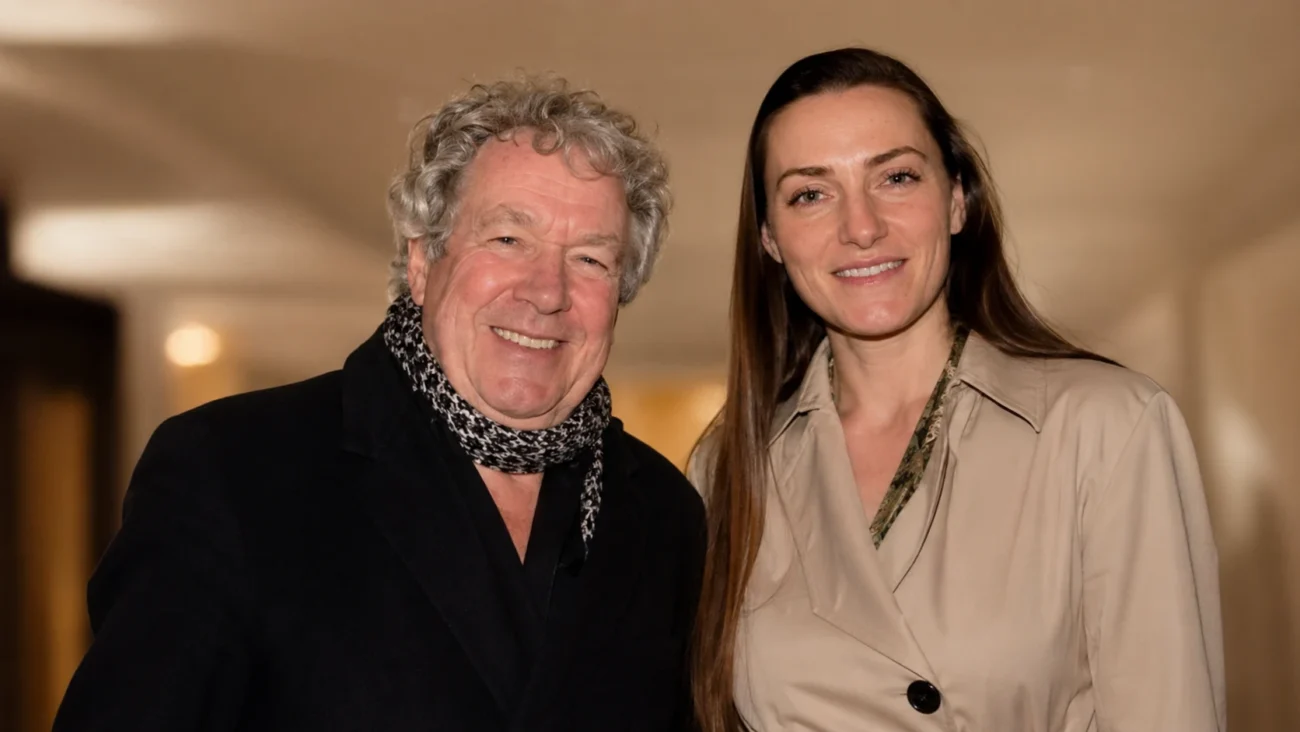
Anna Soderstrom is a name many people discover through Terry Jones, the Monty Python writer, performer, director, historian, and children’s author whose work helped shape British comedy. Yet the public record shows that she is more than a footnote in someone else’s famous life. She is a Swedish-born creative figure, a self-taught knitwear designer, a mother, and a private person whose public visibility grew during one of the most difficult chapters in Jones’s life. Her story is quiet by celebrity standards, but that is exactly why it deserves careful handling.
The challenge with writing about Anna Soderstrom is that she has not lived as a public personality in the usual sense. She has not built a media brand around herself, and she has not made a habit of interviews or public confession. Much of what readers find online repeats the same handful of facts, often padded with guesses about money, family life, or current whereabouts. A fair biography has to begin with what is known and avoid turning absence into speculation.
Who Is Anna Soderstrom?
Anna Soderstrom, also written as Anna Söderström, is best known publicly as the second wife and widow of Terry Jones. She has also been described in lifestyle and design coverage as a knitwear designer with Swedish roots and a craft practice influenced by Scandinavian traditions. Her public identity sits at the meeting point of family, design, and cultural history, because her name became widely searchable through her marriage to a man whose work remains beloved across generations. That connection brought attention, but it did not make her a conventional celebrity.
The most reliable picture of Soderstrom is specific rather than expansive. She studied modern languages at Hertford College, Oxford, and later developed a design practice focused on cashmere accessories, including scarves, hats, blankets, and Christmas stockings. Her work has been linked to Gotland, the Swedish island associated with her background and with traditional knitting patterns that shaped her sense of design. Those details give her public story texture without requiring invention.
Unlike many people who become known through a famous spouse, Soderstrom has not seemed eager to widen the spotlight. Public appearances and interviews connected to her own life are limited, and information about her current routine is sparse. That restraint should not be mistaken for mystery in the dramatic sense. It is more accurately a sign that she has chosen a private life while remaining connected to a public legacy.
Early Life and Swedish Roots
Public sources describe Anna Soderstrom as Swedish-born, with Gotland appearing as an important place in accounts of her background and design influence. Gotland is known for its strong craft traditions, and the island’s textile history appears to have informed the patterns and atmosphere of Soderstrom’s knitwear. Her work has been described as simple, restrained, and rooted in Scandinavian taste rather than trend-driven fashion. That sense of place is one of the few well-documented windows into her early influences.
There is less confirmed public information about her parents, childhood home, or family upbringing. Many online biography pages claim exact personal details, but those claims are often unsourced or repeated from one another. A responsible account should not pretend that every gap can be filled. What can be said is that her Swedish background later became part of how she understood and presented her creative work.
The Swedish influence also helps explain why her designs were not described as loud or heavily decorative. Profiles of her work point instead to cashmere, clean patterning, and a softer adaptation of traditional motifs. That design language suggests someone drawn to memory, tactility, and careful repetition. It also separates her from the celebrity-spouse image that often dominates searches for her name.
Education at Oxford
Soderstrom’s education is one of the clearer parts of her biography. She studied modern languages at Hertford College, Oxford, and some accounts specify French and linguistics. That academic background matters because it places her early adult life in a serious intellectual setting rather than in entertainment or fashion. Oxford also appears in accounts of how she later became connected to Terry Jones.
Modern languages may seem far from knitwear, but the two worlds are not as unrelated as they first appear. Language study trains attention to structure, pattern, translation, and cultural memory. Knitwear design, especially when based on traditional motifs, asks for a similar ability to carry meaning from one form into another. Soderstrom’s later work can be read as a kind of translation from Swedish craft heritage into contemporary accessories.
There is no reliable public record showing that she set out from university with a plan to become a public designer. Her route into craft appears to have been more personal and gradual. That makes her career story different from a standard fashion biography built around design school, apprenticeships, and runway milestones. It is instead a story of a private skill becoming a small public business.
Becoming a Knitwear Designer
The best-known account of Soderstrom’s creative beginning links it to pregnancy. She reportedly began knitting while pregnant after severe morning sickness limited what she could do, and the practice became a steady, absorbing focus. By the time her daughter Siri was born, she had taught herself enough to create patterns using pencil and graph paper. That origin gives her design work a human scale.
Her work centered mainly on cashmere accessories, including scarves, hats, blankets, and stockings. The pieces were presented as hand-finished or closely connected to manual processes rather than as mass-market fashion. She used a domestic knitting machine, but descriptions of her process make clear that it was not simply automated production. The work required planning, handling, patience, and a strong eye for pattern.
Her designs were sold through her own channels, fairs, and selected London boutiques. That suggests a small, craft-based business rather than a large commercial label. The distinction matters because some online profiles inflate small creative careers into something grander than the evidence supports. Soderstrom’s design work is meaningful because of its specificity, not because it needs to be made larger than it was.
Style, Craft, and Scandinavian Influence
Anna Soderstrom’s design identity appears to have been shaped by restraint. Her knitwear drew on Swedish traditions while avoiding the heavy-handed clichés that can sometimes attach themselves to Nordic style. The work was described as simple, timeless, and rooted in natural materials. That combination gave it a quiet elegance suited to people who value craft over display.
Cashmere also says something about the world her designs occupied. It is a luxury material, but in small accessories it can feel personal rather than flashy. Scarves, blankets, hats, and stockings are intimate objects, made to be touched, worn, kept, and passed through family rituals. In Soderstrom’s case, Christmas stockings became one of the products most closely connected to memory and tradition.
Her use of old Gotland-inspired patterns shows an interest in continuity. Rather than inventing an entirely new visual language, she adapted inherited designs into modern pieces. That choice fits the broader story of her public life, which often sits between private memory and public association. She is known partly through legacy, but her own work also reflects a respect for legacy.
Meeting Terry Jones
Anna Soderstrom’s public biography is inseparable from Terry Jones, though it should not be reduced to him. Jones was one of the founding members of Monty Python, the comedy group whose television series and films changed the rhythm of British humor. He wrote, performed, directed, and later became known for history programs and books that reflected his wide intellectual interests. To be connected to him was to be connected to a major cultural figure.
Reports have described Soderstrom and Jones meeting in Oxford, with one account placing their first encounter at a book signing. The finer details of that meeting are not deeply documented in the public record, so they should be treated carefully. What is better established is that their relationship eventually became long-term and that they had a daughter together. Their family life later became part of the public story surrounding Jones’s illness and death.
The relationship attracted attention because of the age gap between them. Jones was more than four decades older than Soderstrom, and some coverage emphasized that contrast. But focusing only on the age difference creates a thin version of the story. Their relationship also included parenthood, marriage, caregiving, and the shared strain of a devastating illness.
Marriage and Family
Terry Jones had been married before, to Alison Telfer, with whom he had two children, Bill and Sally. His later relationship with Anna Soderstrom brought another daughter, Siri, into the family. Jones and Soderstrom married in 2012, according to public reporting, after his first marriage had ended. That family structure became more visible after Jones’s death, when statements and reports named Anna alongside his children.
Siri was still young when Jones’s health became a matter of public concern. Because she is not a public figure, responsible coverage should keep details about her limited. Her existence is part of the public family record, but her private life should not be treated as material for public curiosity. That is especially true given the sadness and complexity of Jones’s final years.
Soderstrom’s place in Jones’s family became more visible during his illness. She was not simply mentioned as a spouse in formal terms; she was part of the family context in which his condition was discussed. Public statements after his death presented a family asking for privacy while also acknowledging the medical professionals and carers who supported Jones. That framing matters because it shows the human reality behind a famous name.
Terry Jones’s Illness
Terry Jones was diagnosed with frontotemporal dementia, a condition that can affect behavior, personality, language, and communication. In his case, public reporting also referred to primary progressive aphasia, a form that affects the ability to use and understand language. For a writer and performer whose life had been built around words, the diagnosis carried a particular cruelty. It took aim at the very tools that had made him himself in public.
Soderstrom’s role during that period was partly private and partly public. She was part of Jones’s family support system, but she also helped share his story for dementia research awareness. Jones and Soderstrom were connected to fundraising efforts that brought attention to frontotemporal dementia, a condition less widely understood than Alzheimer’s disease. That work gave the public a clearer sense of what Jones and his family were facing.
The illness changed the way many fans saw Jones’s final years. People knew him as a performer of sharp verbal comedy, a writer with intellectual appetite, and a director with a taste for satire and historical argument. Dementia made that legacy feel fragile, but it also brought admiration for how his family and friends spoke about him. Soderstrom’s presence in that story was quiet, but it was real.
Terry Jones’s Death and Public Tributes
Terry Jones died on 21 January 2020 at the age of 77. His death was widely reported across Britain and beyond, with tributes from comedy figures, fans, broadcasters, and cultural institutions. The family statement described his long struggle with frontotemporal dementia and asked for privacy. It also made clear that Anna was by his side during his final period.
For Soderstrom, Jones’s death placed a private loss inside a public moment of mourning. The world was saying goodbye to a comic legend, while his family was saying goodbye to a husband and father. That difference can be easy to forget when famous deaths become cultural events. In her case, the public record preserves only a small part of the grief.
The tributes to Jones focused naturally on Monty Python, his films, and his later work in history and children’s writing. Yet they also reminded readers that fame does not protect families from the ordinary pain of illness. Soderstrom’s name appeared in that context not as a performer or public commentator, but as someone living through the private cost of a public figure’s decline. That is a difficult position, and it should be written about with care.
Public Attention and Inheritance Reporting
After Jones’s death, Anna Soderstrom’s name appeared in coverage of a reported inheritance dispute. Public reporting in 2021 said that Jones’s adult children from his first marriage, Bill and Sally, brought a claim against Soderstrom under the Inheritance Act 1975. That law allows certain family members or dependents to seek reasonable financial provision from an estate. The reporting available to the public did not fully disclose the terms of the will, the details of the claim, or a final outcome.
This is the kind of subject where care matters. A lawsuit or claim does not automatically reveal motives, family feeling, or moral blame. Inheritance disputes can involve legal definitions, family history, estate planning, and private negotiations that outsiders do not see. Without full court documents or confirmed resolution, any stronger claim would be unfair.
The existence of the reported dispute does show that Soderstrom’s public image became more complicated after Jones’s death. She was no longer appearing only in design profiles or family tributes. Her name was also attached to legal reporting about a famous estate. That shift is one reason online searches about her often mix biography with speculation about money.
Net Worth and Money Questions
Readers often search for Anna Soderstrom’s net worth, but there is no verified public figure. Many celebrity biography sites publish estimates, yet those estimates rarely show credible evidence. They often appear to be built from assumptions about her marriage, her design work, or Terry Jones’s estate. A serious biography should not present those numbers as fact.
Her known income sources are easier to describe than to price. Soderstrom has worked as a knitwear designer, selling small luxury accessories through direct and boutique channels. She was also married to Terry Jones, whose career included television, film, books, performance, and directing. But knowing those facts does not allow anyone to calculate her personal wealth with precision.
The estate reporting after Jones’s death makes the money question more sensitive, not clearer. Legal claims can involve complex family arrangements, and public reports did not provide enough detail to confirm what Soderstrom received or retained. The honest answer is that her net worth is not publicly verified. Any precise figure should be treated as an estimate at best and guesswork at worst.
Was Anna Soderstrom an Actress?
Some databases and search results describe Anna Soderstrom as an actress, but that label needs context. She has been connected to limited screen credits, including a minor credit as a student extra and an appearance as herself in a documentary connected to Terry Jones. Those entries are real enough to explain why the label appears. They do not, however, establish acting as her main career.
The stronger description is that Soderstrom is a designer with a small number of screen-related credits. Entertainment databases often categorize people according to any available credit, even when the credit is incidental. That can distort public understanding, especially when a person is already searched because of a famous spouse. In her case, “knitwear designer” is more informative than “actress.”
This distinction also helps readers understand how online biographies become inaccurate. A minor screen credit can be copied into a headline, then repeated until it seems central. Over time, the copied label can crowd out better-supported facts. Soderstrom’s public record shows why careful wording matters.
Public Image and Privacy
Anna Soderstrom’s public image is shaped as much by absence as by presence. She has not courted publicity, and she has not tried to become a personality in the wake of Terry Jones’s death. That silence leaves room for speculation, but it also tells us something about her boundaries. She appears to have chosen a life that remains largely outside the entertainment press.
That privacy can be difficult for search culture to accept. Readers want dates, homes, new relationships, business updates, and financial figures. Search results often reward pages that pretend to know more than they do. But a private person does not become less private because people are curious.
The best way to understand Soderstrom is to keep the frame proportionate. She is publicly relevant because of her marriage to a major comic figure, her own documented design work, and her connection to dementia-awareness efforts around Jones. She is not a public official, a major entertainment figure, or someone who has made her private life into a career. That difference should shape the tone of any biography.
Where Anna Soderstrom Is Now
There is limited reliable public information about Anna Soderstrom’s current life. Since Terry Jones’s death, she has not maintained a high-profile media presence, and there are no widely confirmed recent public projects. Her earlier design work remains part of her public record, but the current status of that business is not clearly documented in major sources. That makes any definite claim about where she lives, what she earns, or what she does daily unsafe.
What can be said is that she remains part of Terry Jones’s family legacy. Her name appears in accounts of his final years, his dementia diagnosis, and the family structure that survived him. She is also part of the quieter story of people who care for loved ones through neurodegenerative illness. That role is often less visible than fame, but it is deeply consequential.
Current status is one of the areas where many readers will find unsatisfying answers. But uncertainty is better than false confidence. The public record supports a careful statement: Anna Soderstrom appears to live privately after a period of intense family and public attention. Anything more specific would need fresh, reliable confirmation.
Legacy and Cultural Meaning
Anna Soderstrom’s legacy is not the same kind of legacy as Terry Jones’s. He left behind performances, films, scripts, books, and a body of comic work that continues to circulate. Her public legacy is quieter and more personal. It lies in craft, family, and the way a private person became attached to a very public cultural story.
Her knitwear work gives her biography a creative center of its own. It shows a person making things with her hands, drawing from Swedish memory, and turning a difficult physical period into a practice. That part of her story is modest but meaningful. It resists the assumption that people known through marriage have no separate identity.
Her connection to Jones’s illness also matters. Frontotemporal dementia remains less widely understood than many other conditions, and public figures can help bring attention to it. Soderstrom’s participation in sharing Jones’s story added a family voice to that awareness. It was not showy, but it carried weight because it came from lived proximity.
Frequently Asked Questions
Who is Anna Soderstrom?
Anna Soderstrom is a Swedish-born knitwear designer best known publicly as the second wife and widow of Terry Jones. She studied modern languages at Oxford and later developed a design practice focused on cashmere accessories influenced by Swedish craft traditions. Her name became widely known because of her marriage to Jones and her presence during his final years.
She is not a conventional celebrity, and much of her life remains private. Reliable public information about her is limited compared with the amount of search interest in her name. The most accurate way to describe her is as a designer, mother, and private figure connected to a major British comedy legacy.
Was Anna Soderstrom married to Terry Jones?
Yes, Anna Soderstrom was married to Terry Jones. Public reporting says they married in 2012, and they had a daughter together named Siri. Jones had two older children, Bill and Sally, from his first marriage to Alison Telfer.
Their relationship attracted public attention partly because Jones was a famous figure and partly because of the age gap between them. That said, the central public facts are marriage, parenthood, and Soderstrom’s presence during his illness. Jones died in January 2020 after living with frontotemporal dementia.
Does Anna Soderstrom have children?
Anna Soderstrom and Terry Jones had one daughter together, Siri. Reports after Jones’s death named Siri alongside Anna and Jones’s older children from his first marriage. Because Siri is not a public figure, responsible coverage keeps details about her private life limited.
The family context matters mainly because it helps readers understand Jones’s later years. He was not only a public performer but also a husband and father. Soderstrom’s role in that family story became visible during his illness and after his death.
What does Anna Soderstrom do?
Anna Soderstrom has been publicly identified as a knitwear designer. Her work has included cashmere scarves, hats, blankets, and Christmas stockings, with designs influenced by Swedish and Gotland textile traditions. She began knitting during pregnancy and later turned the skill into a small creative business.
There is not enough reliable public information to confirm the exact current status of that business. Older profiles show that she sold through her own channels, fairs, and selected boutiques. Current claims about her work should be treated carefully unless supported by recent reliable sources.
What is Anna Soderstrom’s net worth?
Anna Soderstrom’s net worth is not publicly verified. Online estimates exist, but they generally do not provide strong evidence or primary financial records. For that reason, they should be treated as speculation rather than fact.
Her known income sources include her design work, while her marriage to Terry Jones naturally prompts questions about estate and inheritance. Public reporting has mentioned a legal claim involving Jones’s estate, but available reports do not provide enough detail to calculate Soderstrom’s personal wealth. A precise net worth figure would be misleading without verified documentation.
Was Anna Soderstrom involved in Terry Jones’s dementia advocacy?
Anna Soderstrom was connected to public awareness efforts around Terry Jones’s frontotemporal dementia. Jones’s diagnosis was publicly discussed, and he and Soderstrom were associated with fundraising and awareness work for dementia research. Their story helped bring attention to a condition that affects language, behavior, and personality.
That public role was limited but meaningful. Soderstrom was not presenting herself as a campaigner in the broad celebrity sense. She was part of a family sharing a painful experience in a way that helped others understand the illness.
Is Anna Soderstrom still in the public eye?
Anna Soderstrom does not appear to be highly active in public life. Since Terry Jones’s death, reliable public information about her current activities has been limited. She has not built a public-facing media career or made her private life a regular subject of interviews.
That privacy should be respected. She remains of interest because of her marriage to Jones, her design work, and her role in his final years. Beyond those facts, much of her current life is not publicly confirmed.
Conclusion
Anna Soderstrom’s story sits in the space between public curiosity and private life. She is searched because of Terry Jones, but the more careful account shows a person with her own education, creative work, and cultural roots. Her biography does not need exaggeration to be meaningful. It needs accuracy, restraint, and attention to the details that can be known.
Her design work reveals a quieter identity than the one attached to celebrity headlines. Cashmere accessories, Swedish patterns, and small-scale making tell us something about her taste and temperament. They suggest patience, memory, and a preference for work that is felt as much as seen. That part of her life deserves a place beside the better-known family story.
Her years with Terry Jones brought love, parenthood, public scrutiny, illness, and loss. They also connected her name to dementia awareness and to the legacy of one of Britain’s most admired comic minds. That is a lot for any private person to carry in public. The fairest reading of Anna Soderstrom is not as a mystery to solve, but as a private woman whose life briefly crossed the full glare of cultural fame and then, by all signs, returned toward privacy.
