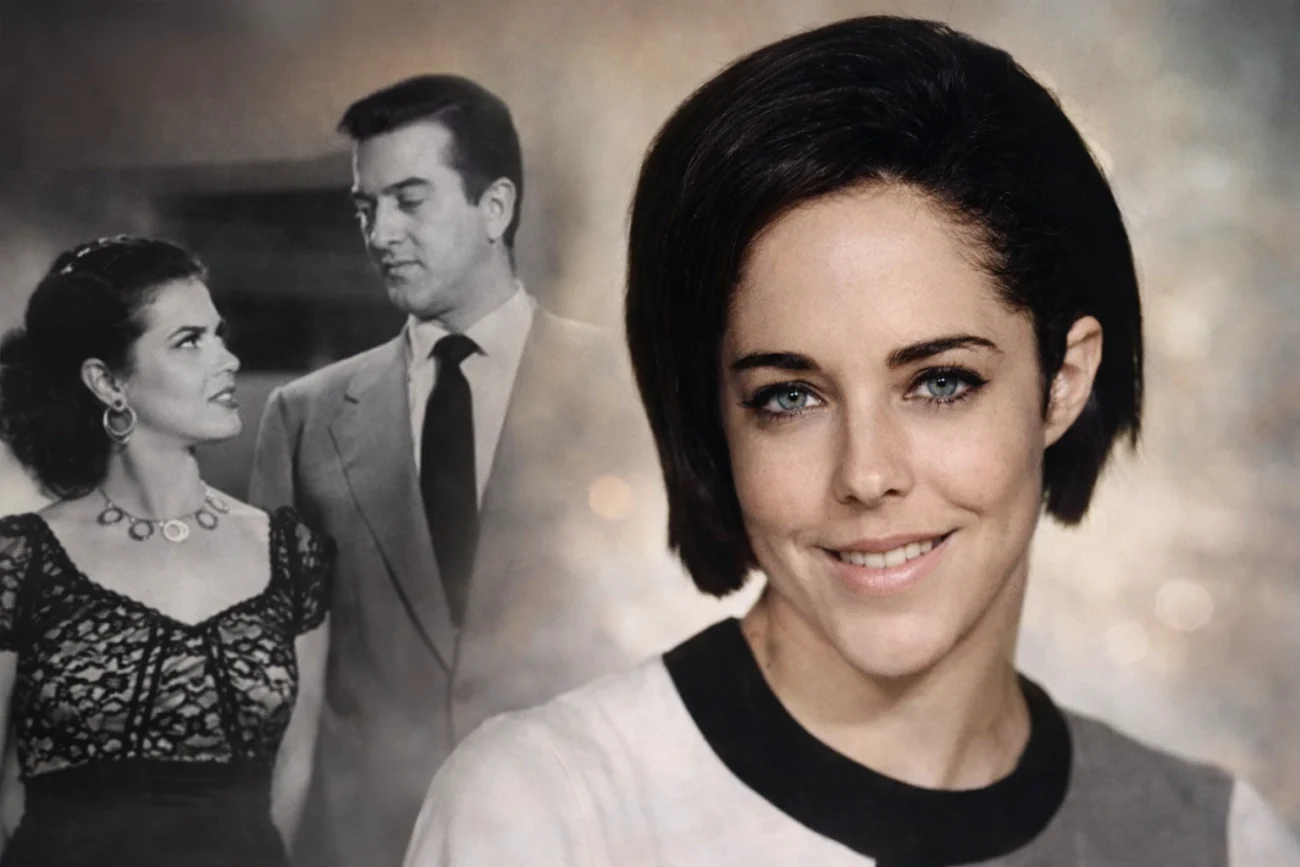
For someone whose name now circulates across biography pages and search engines, Nia Novella Travilla lived a life that appears to have been largely out of the spotlight. Her story, such as it can be reliably told, sits at the intersection of Hollywood history and private existence. She was born into a family tied to some of the most recognizable images of mid-20th-century cinema, yet her own life left only a faint public record.
That contrast is what draws attention. People searching for Nia Novella Travilla often arrive expecting a familiar arc of celebrity inheritance, perhaps another story of a child stepping into the limelight. Instead, what emerges is quieter, more fragmented, and in some ways more revealing. Her life shows how proximity to fame does not always translate into public identity, and how easily the internet fills in the gaps when documentation is thin.
Early Life and Family Background
Nia Novella Travilla was born on August 16, 1951, in Los Angeles, California. She was the only child of William Travilla, one of Hollywood’s most accomplished costume designers, and Dona Drake, a performer whose career spanned acting, singing, and dancing. From the beginning, her life was tied to an industry that shaped American culture in lasting ways.
Her father, known professionally as Travilla, built a career that reached its peak during Hollywood’s studio era. He won an Academy Award for Best Costume Design for Adventures of Don Juan and became closely associated with Marilyn Monroe, designing costumes for several of her most famous films. His work helped define the visual identity of an era, particularly the iconic white dress worn by Monroe in The Seven Year Itch.
Her mother, Dona Drake, carried a different kind of story. Born Eunice Westmoreland, she navigated a complicated racial identity in an industry that often demanded reinvention. She performed under various names, including Rita Rio and Rita Novella, and was frequently marketed as Latina or of ambiguous heritage despite her African American background. Her career included roles in films like Road to Morocco and The Girl from Jones Beach, and she also led a touring orchestra.
Nia’s childhood unfolded within this layered family history. On one side was a celebrated designer shaping cinematic images. On the other was a performer negotiating identity and opportunity in a restrictive industry. Those influences formed the backdrop of her early years, even as her own life would take a different path.
Growing Up in Hollywood’s Orbit
Being raised in Los Angeles in the 1950s and 1960s meant living at the center of the film industry’s influence, even if one remained outside its inner circle. For Nia Travilla, the environment would have included studio connections, industry acquaintances, and the rhythms of a city shaped by production schedules and premieres.
Her parents’ marriage, however, did not remain stable. William Travilla and Dona Drake separated during Nia’s childhood, although they remained legally married until Drake’s death in 1989. That arrangement was not unusual in Hollywood at the time, where personal and professional lives often followed unconventional patterns.
Details about Nia’s schooling and early interests are not widely documented in public records. That absence has led many modern accounts to speculate about her upbringing, sometimes painting vivid scenes of life on film sets or within artistic circles. The truth is more restrained. While it is reasonable to assume she had exposure to the industry through her parents, there is no strong evidence that she pursued acting, costume design, or any form of public performance.
What stands out is that she did not follow the expected trajectory of a Hollywood child. Instead of stepping into film or television, she appears to have chosen a quieter, more private direction. That decision, whether deliberate or circumstantial, shaped how little of her life entered the public domain.
Education and Personal Direction
Publicly available information about Nia Travilla’s education is limited, and this is one of the areas where caution is necessary. Some online biographies claim she pursued higher education in veterinary science, but they rarely provide supporting documentation such as university records or institutional affiliations.
What can be said with more confidence is that her adult life appears to have moved away from the entertainment industry. There is no substantial record of film credits, stage performances, or other artistic work under her name. That absence suggests a conscious or natural shift toward a different professional path.
The recurring claim that she became a veterinarian has some basis, though it is not fully documented in the way a public figure’s career would be. A memorial entry describes her as a local veterinarian, which gives the idea some grounding. However, details such as where she studied, where she practiced, and how long she worked in that field remain unclear in the available sources.
That uncertainty is important. It highlights the difference between a widely repeated claim and a fully verifiable career history. Still, the consistency of the veterinarian description across multiple references suggests that it may reflect a genuine aspect of her life, even if the specifics remain out of reach.
A Life Outside the Spotlight
What makes Nia Novella Travilla’s story unusual is not just what is known, but what is not. Unlike many children of Hollywood figures, she did not cultivate a public image or seek media attention. There are no widely circulated interviews, no promotional appearances, and no documented efforts to build a public persona.
This absence has shaped how she is remembered. Rather than a career defined by public milestones, her life appears to have been defined by private work and personal commitments. The veterinarian narrative, if accurate, fits that pattern. It suggests a profession centered on service rather than visibility, a contrast to the performative nature of her parents’ careers.
Not many people know this, but lives like hers are common within entertainment families. For every child who follows a parent into fame, there are others who choose different paths entirely. The difference is that most of those lives do not attract retrospective curiosity. Nia Travilla’s connection to a well-documented Hollywood lineage is what keeps her name circulating.
Her choice, whether intentional or not, resulted in a life that left fewer traces for historians and writers. That scarcity has allowed speculation to fill the gaps, often turning a quiet life into something more dramatic than the evidence supports.
Relationships and Personal Life
Information about Nia Travilla’s personal relationships is similarly limited. Some public record indexes suggest that she was married to a man named Jose L. Ariza in the early 1970s, with a divorce following a few years later. These details appear in secondary sources rather than fully documented public records, so they should be treated as reported rather than definitively confirmed.
There is no widely supported evidence that she had children. Several sources state that she did not, but again, this is based on repetition rather than primary documentation. In cases like this, the absence of records does not necessarily equal proof, but it does suggest that her family life, if it existed, remained private.
What is clearer is that she did not maintain a public-facing personal profile. There are no widely cited interviews, memoirs, or public statements that offer insight into her views, relationships, or daily life. That silence reinforces the sense that she lived outside the structures that typically generate public documentation.
Later Years and Death
Nia Novella Travilla died on October 1, 2002, at the age of 51. Public records confirm the date, though there is some variation in the reported location, with references pointing to both Oakland and Los Angeles, California. The cause of her death has not been clearly documented in the available sources.
The lack of a widely accessible obituary is notable, especially given her family’s connection to Hollywood. It suggests that by the time of her death, she was not part of the public narrative surrounding her parents’ legacy. Her passing did not generate the kind of media attention that often accompanies figures tied to the entertainment industry.
That said, memorial records describe her in terms that align with the broader image of a private individual. The references to her work as a veterinarian, along with the absence of public controversy or scandal, point toward a life lived largely outside public scrutiny.
Family Legacy and Cultural Context
While Nia Travilla herself did not become a public figure, her family’s legacy remains significant. William Travilla’s work continues to be studied and celebrated in film history, particularly for its influence on costume design and its association with iconic cinematic moments. His creations are preserved in archives and exhibitions, ensuring that his contributions remain visible.
Dona Drake’s legacy has also gained renewed attention, particularly in discussions about race and identity in Hollywood. Her career reflects the complexities of an industry that often required performers to navigate and sometimes obscure their backgrounds. That history adds depth to the context in which Nia was raised.
What’s surprising is how little of that legacy appears to have translated into public documentation of Nia’s own life. Instead of becoming a bridge between past and present in the public eye, she remains a largely private figure connected to a very public history.
This contrast highlights a broader truth about fame. It does not always extend across generations in the way people expect. Sometimes it fades, and sometimes it is deliberately set aside.
Net Worth and Financial Context
There is no credible public record of Nia Novella Travilla’s net worth. Any figures that appear online should be treated with skepticism, as they are not supported by verifiable financial disclosures or estate records.
It is reasonable to assume that her financial situation was influenced by her family background, particularly given her father’s successful career. However, without documented evidence such as inheritance records or business filings, it is not possible to assign a reliable estimate.
This is another area where the difference between speculation and fact becomes clear. Many online profiles attempt to quantify her wealth, but those figures do not appear to be grounded in publicly available data.
Public Image and Online Narrative
In recent years, Nia Novella Travilla’s name has become more visible online, largely due to the rise of search-driven biography content. Many of these profiles present her as a fully documented figure, complete with detailed career descriptions and personal anecdotes.
The truth is more restrained. The available evidence supports a basic outline of her life but does not justify the level of detail found in many online accounts. This discrepancy reflects a broader pattern in digital media, where lightly documented individuals are often given fully constructed narratives.
The truth is, the internet tends to reward completeness over accuracy. When information is scarce, it is often supplemented with assumptions that feel plausible but are not fully supported. Nia Travilla’s online presence is a clear example of that dynamic.
For readers, the challenge is to approach such material with a critical eye. The most reliable portrait is not the most detailed one, but the one that aligns with verifiable evidence.
Frequently Asked Questions
Who was Nia Novella Travilla?
Nia Novella Travilla was the daughter of costume designer William Travilla and actress Dona Drake. She was born in 1951 in Los Angeles and died in 2002 at the age of 51. Her life appears to have been largely private, with limited public documentation beyond family connections.
Was Nia Novella Travilla a public figure?
No, she was not a public figure in the traditional sense. Unlike her parents, she did not pursue a career in entertainment or maintain a public profile. Most of the information about her comes from genealogical records and secondary references.
Did Nia Travilla work as a veterinarian?
There is some evidence suggesting she worked as a veterinarian, including references in memorial records. However, detailed information about her education and professional career is not widely documented, so this should be considered a likely but not fully confirmed aspect of her life.
Who were her parents?
Her father, William Travilla, was an Academy Award–winning costume designer known for his work with Marilyn Monroe. Her mother, Dona Drake, was an actress and performer who appeared in films and led a musical career.
Was she married?
Some public record indexes indicate that she may have been married to Jose L. Ariza in the early 1970s, with a subsequent divorce. These details are not extensively documented, so they should be viewed as reported rather than definitively confirmed.
What is known about her death?
She died on October 1, 2002, at age 51. The exact location varies across records, and the cause of death has not been clearly established in publicly available sources.
Conclusion
Nia Novella Travilla’s life does not fit neatly into the narratives often built around Hollywood families. She was born into a world shaped by film, design, and performance, yet she appears to have chosen a path that remained largely outside public view. That contrast is what makes her story quietly compelling.
Her biography, as it stands, is defined as much by its gaps as by its details. Those gaps are not failures of research so much as reflections of a life lived without the need for public recognition. In a culture that often equates visibility with importance, that choice carries its own meaning.
There is also a lesson in how her story has been told online. The expansion of her biography beyond what can be confirmed shows how easily narrative can outpace evidence. It underscores the importance of careful reporting, especially when dealing with individuals who did not seek the spotlight.
What remains is a portrait that is modest but grounded. Nia Travilla was part of a notable family, lived a largely private life, and left behind a record that invites curiosity while resisting easy conclusions. That, in itself, is a story worth telling.
