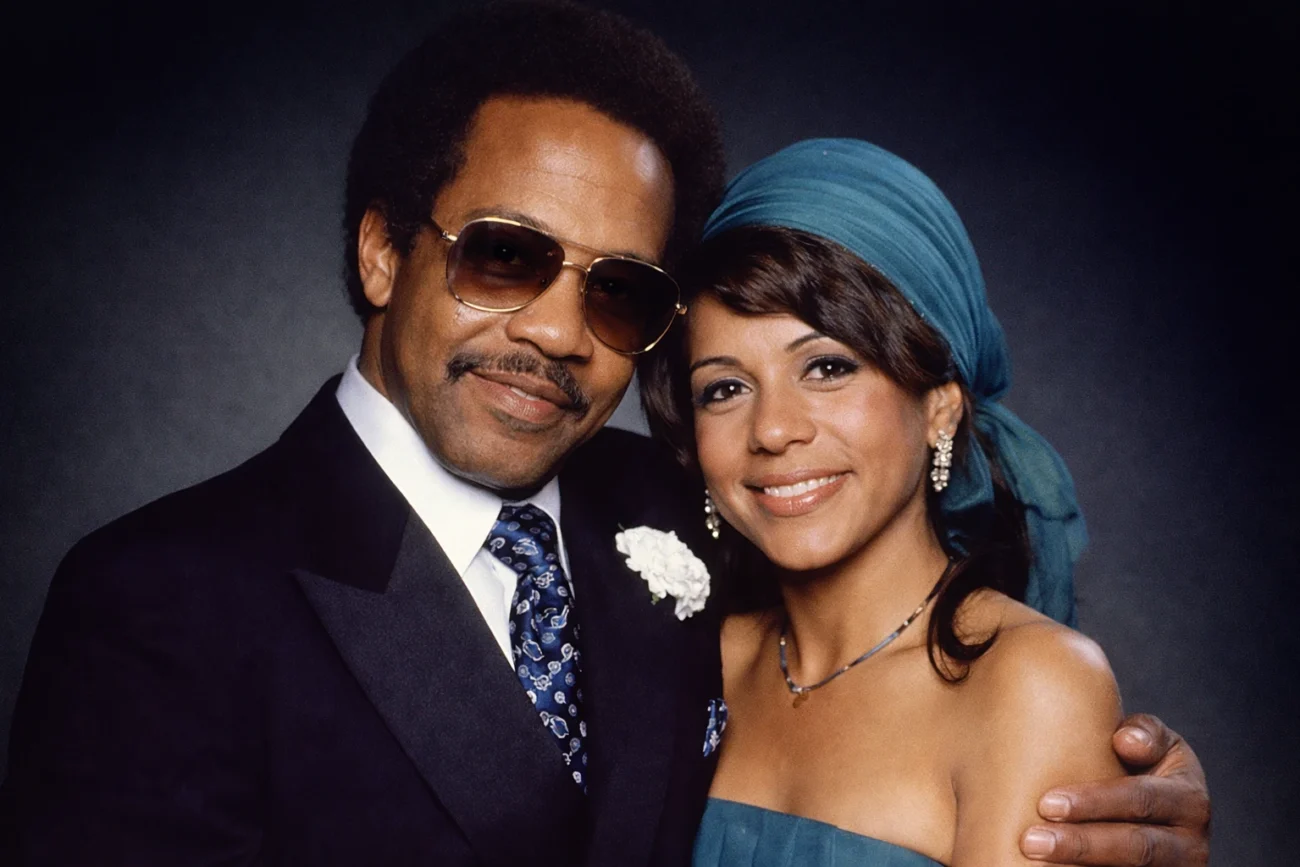
In 1971, at Madison Square Garden, amid one of boxing’s most iconic nights—the “Fight of the Century” between Muhammad Ali and Joe Frazier—Frank Lucas made a decision that would echo through decades of crime lore. He arrived wearing an extravagant chinchilla coat and hat, seated among celebrities and elites. According to later accounts, the coat had been purchased by his wife, Julianna Farrait. In that moment, the low-profile Harlem drug trafficker became visible. And beside that image, almost inseparable from it, was the woman who had entered his life years earlier on a flight from Puerto Rico.
Julianna Farrait, widely known as Frank Lucas’s wife, is a figure both central and elusive in American crime history. She was not simply a partner in the background of a notorious man’s life. She was present during his rise, implicated in his downfall, and later reappeared in headlines long after the empire that defined their early years had collapsed. Her story has been retold through journalism, courtroom records, and Hollywood fiction, yet much of her personal life remains surprisingly difficult to pin down.
What remains, however, is enough to build a portrait that is both grounded and revealing. Farrait’s life traces the arc of proximity to power, the cost of loyalty, and the long shadow of decisions made in youth. To understand Frank Lucas fully, you have to understand her. But to understand her, you have to look past the myth.
Early Life and Background
Julianna Farrait was born in Puerto Rico, though exact details about her early life—her birth year, family background, and education—are not consistently documented in public records. This absence is not unusual for figures who entered public awareness through criminal cases rather than conventional public careers. What’s clear is that she grew up outside the world she would later inhabit, in a cultural and geographic context far removed from Harlem’s drug trade.
Some later accounts have described her as strikingly beautiful and socially confident, traits that likely shaped how she moved through both everyday life and the more rarefied circles she would later enter. Claims that she was a beauty pageant winner, including suggestions that she was once “Miss Puerto Rico,” have circulated widely. However, these claims are not supported by reliable primary documentation and are often traced back to dramatized versions of her story, including film portrayals.
The lack of detailed early records has allowed imagination to fill the gaps. But the truth is simpler and more grounded. Farrait was a young woman from Puerto Rico who, like many others in the mid-20th century, traveled to the mainland United States. Her life changed not because of a predetermined trajectory, but because of a single encounter that would tie her future to one of the most notorious figures in American drug history.
Meeting Frank Lucas
Frank Lucas, born in 1930 in North Carolina, had already begun building his reputation in New York by the time he met Julianna Farrait. According to Lucas’s own account, the two met on a flight from Puerto Rico to New York in the mid-1960s. He described noticing her across the aisle, smiling, and initiating a conversation that would lead to a relationship.
Farrait later echoed a version of that early impression, describing Lucas as confident and composed. That detail helps explain the dynamic that followed. Lucas was not just wealthy; he carried himself with a kind of authority that drew attention. For Farrait, the attraction appears to have been immediate and mutual, rooted in both personality and presence.
They married in 1967, at a time when Lucas’s operations were expanding rapidly. By then, he was moving beyond small-scale dealings into a large heroin distribution network that would eventually span cities. Their marriage was not a quiet domestic arrangement. It unfolded alongside a criminal enterprise that would define both of their public identities.
Marriage and Family Life
Julianna Farrait and Frank Lucas built a family together, most notably welcoming their daughter, Francine Lucas-Sinclair. From the outside, their life appeared affluent and stable, shaped by the considerable wealth Lucas accumulated during his peak years. They lived in a suburban home in Teaneck, New Jersey, a deliberate choice that reflected Lucas’s attempt to distance his family life from the visible chaos of Harlem.
But the truth is, their domestic life existed within a fragile structure. The wealth that supported it came from illegal activity, and that reality shaped everything around it. Francine Lucas-Sinclair would later describe her childhood as comfortable but overshadowed by instability, a life that felt secure until it suddenly wasn’t.
When Lucas and Farrait were arrested in the mid-1970s, that fragile structure collapsed. Their daughter was separated from them and raised for a time by relatives. Francine has spoken publicly about the trauma of that experience, recalling the day of her parents’ arrest as a defining moment in her life. Her later work with children of incarcerated parents reflects the long-term impact of that rupture.
Her Role in the Lucas Drug Empire
One of the most persistent misconceptions about Julianna Farrait is that she was merely a bystander. The record suggests otherwise. She was not the architect of Lucas’s operations, but she was not removed from them either. Court proceedings and later accounts confirm that she was convicted in connection with his criminal enterprise and served time in prison.
The details of her involvement are not always laid out in full, partly because many records focus more heavily on Lucas himself. But her conviction indicates that authorities believed she had a meaningful role, whether through direct participation, financial handling, or awareness of the operation’s scope.
The 1975 raid on their home remains one of the most cited moments in her story. As law enforcement closed in, reports describe Farrait attempting to dispose of large amounts of cash, throwing suitcases out of a window in a desperate effort to avoid seizure. The image has become emblematic of the chaos that accompanies the collapse of such operations.
This moment captures something essential about her position. She was not detached from the consequences of Lucas’s empire. She was inside it, experiencing both its rewards and its downfall in real time.
The Chinchilla Coat and Public Visibility
The chinchilla coat story has endured for decades because it encapsulates a turning point. According to multiple accounts, Farrait purchased the expensive coat and hat that Lucas wore to the Ali-Frazier fight in 1971. Lucas had built his reputation on discretion, avoiding the flashy displays that drew attention to other traffickers.
But that night changed things. The coat made him visible in a way he had previously avoided, placing him in a setting where law enforcement and rivals could take notice. Whether it directly led to his eventual arrest is debated, but both Lucas and Farrait later acknowledged it as a mistake.
The significance of the coat goes beyond fashion. It represents a shift from controlled anonymity to public exposure. And Farrait’s role in that moment highlights her participation in the lifestyle that accompanied Lucas’s rise. She was not just observing the culture of wealth and display; she was part of it.
Prison and Aftermath
After their arrest, both Frank Lucas and Julianna Farrait faced prison sentences. For Farrait, this period marked a stark transition from affluence to confinement. The specifics of her sentence are less widely detailed than Lucas’s, but her incarceration is well documented.
The aftermath of their imprisonment reshaped their family. Their daughter’s childhood was altered permanently, and the couple’s relationship endured under the strain of separation and legal consequences. Lucas later cooperated with authorities, a decision that has been both criticized and contextualized in different accounts.
For Farrait, the years following her release are less clearly documented. Unlike Lucas, who became a public figure through interviews and his autobiography, she maintained a lower profile. That absence from the spotlight has contributed to the sense of mystery around her later life.
The 2010 Arrest in Puerto Rico
Decades after the collapse of Lucas’s empire, Julianna Farrait returned to headlines. In May 2010, at the age of 70, she was arrested in Puerto Rico in connection with an alleged attempt to sell two kilograms of cocaine. According to federal authorities, the case involved recorded conversations with an informant and a planned transaction at a hotel in Isla Verde.
The arrest surprised many observers who had assumed that Farrait had moved beyond her earlier life. It suggested a continuation, or perhaps a return, to the world that had defined her past. Reports indicated that she later expressed regret and sought leniency, citing her desire to spend time with her aging husband.
This episode reinforced a key aspect of her public image. She was not simply a figure from a bygone era of crime. Her connection to that world extended into later life, complicating any attempt to frame her story as one of complete departure or redemption.
Public Image and Cultural Portrayal
For many people, Julianna Farrait is known primarily through American Gangster, the 2007 film starring Denzel Washington as Frank Lucas. In the film, her counterpart is Eva, portrayed by Lymari Nadal. While the character draws from Farrait’s life, it also incorporates fictional elements, including the suggestion that she was a beauty queen.
The film’s portrayal emphasizes romance, glamour, and loyalty, presenting a streamlined version of a much more complex reality. It captures the broad outline of her relationship with Lucas but simplifies the legal and personal consequences that followed.
This distinction matters because the film has shaped public perception more than primary reporting has. Many viewers encounter Farrait first through cinema, then seek out the real story afterward. The result is a blend of fact and fiction that requires careful separation.
Where Julianna Farrait Is Now
Information about Julianna Farrait’s current status remains limited and, in some cases, conflicting. Some reports have suggested that she died before Frank Lucas, who passed away in 2019. Others have stated that she was present at his funeral, casting doubt on those earlier claims.
The absence of a widely confirmed, primary-source account leaves her present status uncertain. This uncertainty is not unusual for figures who have lived largely outside public life in their later years. Without consistent documentation, the most responsible approach is to acknowledge the lack of clarity.
What can be said is that Farrait’s public presence diminished significantly after the 2010 case. Unlike Lucas, who continued to engage with media and audiences, she remained largely out of view. Her story, as a result, ends not with a definitive closing chapter, but with a quiet fade from public attention.
Frequently Asked Questions
Who was Frank Lucas’s wife?
Frank Lucas’s wife was Julianna Farrait, a Puerto Rican-born woman who married him in 1967. She became known through her connection to his drug empire and her own legal involvement in his criminal activities.
Did Julianna Farrait have children with Frank Lucas?
Yes, they had a daughter named Francine Lucas-Sinclair. She has spoken publicly about her childhood and the impact of her parents’ incarceration on her life.
Was Julianna Farrait involved in Frank Lucas’s crimes?
She was convicted in connection with his criminal enterprise and served prison time. While she was not the leader of the operation, she was not merely a bystander either.
What happened to Julianna Farrait after prison?
After serving her sentence, she lived largely out of the public eye. However, she was arrested again in 2010 in Puerto Rico in connection with a cocaine case.
Is Julianna Farrait still alive?
Public reports are inconsistent, and there is no universally confirmed answer available in open sources. Some accounts claim she died before Frank Lucas, while others suggest she attended his funeral in 2019.
Was Julianna Farrait portrayed in American Gangster?
Yes, the character Eva in the film was based on her, though the portrayal includes fictionalized elements and should not be treated as a fully accurate biography.
Conclusion
Julianna Farrait’s life does not fit neatly into the categories often applied to figures connected to crime. She was neither invisible nor fully documented, neither purely a victim nor simply an accomplice. Her story sits in the space between those labels, shaped by choices, circumstances, and the powerful influence of the man she married.
Her connection to Frank Lucas ensures that her name remains part of American crime history. But her own actions, including her conviction and later arrest, make her more than a supporting figure. She stands as a reminder that proximity to power carries its own consequences.
There is still much that remains unknown about her life, particularly in its later years. That absence of detail invites curiosity, but it also calls for restraint. Not every story can be fully told, and not every gap should be filled with assumption.
What endures is a portrait of a woman whose life intersected with one of the most notorious criminal enterprises of the 20th century. It is a story marked by attraction, loyalty, risk, and consequence, one that continues to draw interest precisely because it resists easy explanation.
