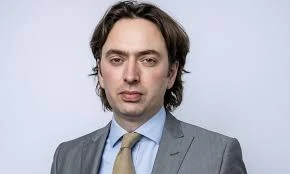
Kieran Clifton is not a household name, yet his work shapes how millions of people watch television without ever realizing it. In an era where audiences increasingly turn to streaming platforms and smart TVs, Clifton has spent much of his career ensuring that traditional public-service broadcasting remains accessible, visible, and relevant. As a senior BBC executive and a key figure behind collaborative industry efforts like Freely, his influence sits quietly behind the screen—embedded in how content is delivered rather than how it is created.
For those who encounter his name, the curiosity is often the same: who is Kieran Clifton, and why does he matter now? The answer lies not in celebrity or spectacle but in a career that mirrors the transformation of television itself. Clifton’s professional life traces the shift from scheduled broadcasting to on-demand streaming, and from isolated broadcasters to shared digital platforms. Understanding his story offers a window into how modern media is structured—and who is helping to build it.
Early Life and Family
Compared with public figures in entertainment or politics, Kieran Clifton has maintained a notably low personal profile. Public records confirm that he was born in September 1971, but details about his early childhood, upbringing, and family background are limited in publicly available sources. This absence is not unusual for senior executives in media infrastructure roles, where visibility tends to follow institutional work rather than personal narrative.
What is known is that Clifton built his career through education and professional advancement rather than through public exposure. There are no widely documented interviews or autobiographical accounts describing his early influences, and he has not cultivated a public persona in the way that many media figures do. Instead, his life story is largely reconstructed through official roles, appointments, and institutional affiliations.
That said, one confirmed personal detail offers a glimpse into his private life. Publicly available biographies state that he lives in London with his wife and three children. Beyond that, Clifton has kept family matters firmly out of the spotlight, a choice that aligns with his broader approach to professional visibility.
Education and Early Ambitions
Clifton’s academic path provides clearer insight into his early direction. He studied Philosophy, Politics, and Economics (PPE) at St Edmund Hall, Oxford—one of the most well-known undergraduate degrees in the UK for those interested in public policy, economics, and leadership. The PPE course has produced generations of influential figures across politics, media, and business, and Clifton’s later career reflects the analytical and strategic grounding that the degree is known for.
After Oxford, he went on to earn an MBA from INSEAD, one of Europe’s leading business schools. INSEAD’s programs are internationally focused and emphasize strategy, global markets, and organizational leadership. For Clifton, this combination of PPE and MBA training positioned him at the intersection of policy thinking and commercial strategy—skills that would later define his work in broadcasting.
Although there is little public record of his early career ambitions, his educational choices suggest a clear interest in large systems and institutional decision-making. Rather than pursuing creative roles within media, Clifton gravitated toward strategy and management, areas where long-term planning and structural thinking are central.
Early Career and Move into Broadcasting
Before joining the BBC, Clifton worked at Channel 5, one of the UK’s major commercial broadcasters. He held the role of Head of Strategy, a position that placed him within the company’s senior decision-making framework. In that role, he would have been involved in shaping how the channel responded to changes in audience behavior, advertising markets, and technological developments.
His move to the BBC came in 2010, when he was recruited to become Head of Strategy within the corporation’s Future Media & Technology division. The timing was significant. The early 2010s marked a period when traditional broadcasters were beginning to grapple seriously with digital disruption, including the rise of streaming services and the growing importance of online content delivery.
Clifton’s entry into the BBC during this period suggests that his expertise was seen as valuable in navigating that transition. Strategy roles within Future Media & Technology were not peripheral; they were central to how the BBC planned its digital future. This early positioning would set the stage for his later leadership in distribution and platform development.
Rise Within the BBC
Clifton’s career at the BBC followed a steady progression rather than a sudden leap into prominence. After his initial strategy role, he became Controller of Digital Strategy, a position that expanded his influence over how the BBC approached its online services and digital products. This role likely involved coordination across multiple departments, from content teams to technical infrastructure.
He later moved into the position of Director of Distribution, and eventually Director of Distribution & Business Development. In this capacity, Clifton became responsible for how the BBC’s television channels, radio stations, and online services are delivered to audiences across the UK. This includes both traditional broadcast methods and modern digital platforms.
His responsibilities extend beyond the BBC’s internal operations. Clifton has played a role in the corporation’s participation in joint ventures such as Freeview, Freesat, and YouView, all of which have been central to the UK’s free-to-air television ecosystem. These platforms have allowed viewers to access a wide range of channels without subscription fees, maintaining a core principle of public-service broadcasting.
What’s striking about Clifton’s career is how closely it aligns with the evolution of the industry. As television shifted from broadcast to hybrid and then to internet-based delivery, his roles evolved in parallel, moving from strategy to execution and from planning to implementation.
The Distribution Challenge in Modern Television
To understand Clifton’s importance, it helps to understand the problem he has spent much of his career addressing. In the past, television distribution was relatively straightforward. Broadcasters transmitted signals via terrestrial, satellite, or cable systems, and viewers accessed content through fixed channels.
Today, that model has been disrupted. Smart TVs, streaming devices, and app-based ecosystems have changed how content is discovered and consumed. Instead of tuning into a channel, viewers navigate menus, apps, and recommendation systems. This shift has created new challenges for public-service broadcasters, whose content must compete for visibility within interfaces often controlled by global technology companies.
Clifton’s role sits at the center of this challenge. Ensuring that BBC services remain accessible and prominent on these platforms requires negotiation, technical integration, and strategic planning. It also requires collaboration with other broadcasters, many of whom face similar pressures.
This is not simply a technical issue; it is also a cultural and policy question. Public-service broadcasting has long been a cornerstone of the UK media system, and its continued relevance depends on whether audiences can easily find and use its services. Clifton’s work is therefore tied to broader debates about media regulation, digital competition, and the future of free television.
Freely and Industry Collaboration
One of the most visible projects associated with Clifton’s work is Freely, a streaming-based free TV platform launched through collaboration between the BBC, ITV, Channel 4, and Channel 5. The service represents an attempt to adapt the traditional free-to-air model to an internet-first environment.
Freely is designed to deliver live and on-demand television over broadband, without requiring a satellite dish or aerial for its core services. It aims to replicate the simplicity of traditional TV while incorporating the flexibility of streaming. For viewers, this means being able to access free public-service content through a single interface on compatible devices.
Clifton has been involved in this initiative through his role at the BBC and his position on the board of Everyone TV, the organization behind Freely as well as Freeview and Freesat. His involvement reflects a broader industry recognition that collaboration is necessary to compete with large global streaming platforms.
The development of Freely also highlights the complexity of modern distribution. Building such a platform requires not only technical expertise but also alignment between competing broadcasters, negotiations with device manufacturers, and engagement with regulators. Clifton’s career has placed him in a position to navigate these intersecting demands.
Board Roles and Industry Influence
In addition to his BBC responsibilities, Clifton holds several board positions that reinforce his influence within the industry. He serves on the board of Everyone TV, representing the BBC’s interests in the organization. Everyone TV oversees key free-to-air platforms in the UK, making it a central player in the country’s broadcasting infrastructure.
He is also a trustee of BBC Children in Need, the corporation’s well-known charitable organization. This role reflects a different aspect of his professional life, connecting him to the BBC’s public-service mission beyond broadcasting itself.
Public records also show his involvement in companies related to digital terrestrial television and multiplex operations. These roles may not attract public attention, but they are essential to maintaining the technical systems that underpin broadcast and hybrid television services.
Taken together, these positions illustrate how Clifton’s work spans multiple layers of the industry. He is not only a BBC executive but also a participant in the broader ecosystem that supports free television in the UK.
Public Image and Personal Approach
Clifton’s public image is defined more by absence than by presence. He does not maintain a high-profile media persona, and there are relatively few interviews or public appearances that offer insight into his personal views. This contrasts with many senior figures in media, who often become public advocates for their organizations.
That said, when he does speak publicly, his focus tends to be on structural issues rather than individual projects. Discussions around platform prominence, distribution models, and industry collaboration reflect a strategic mindset rather than a promotional one.
His low-key profile may also be a reflection of the nature of his work. Distribution and infrastructure roles rarely attract the same level of public attention as content creation or on-screen talent. Yet they are no less important, particularly in a period of rapid technological change.
Money, Salary, and Net Worth
There is no publicly confirmed figure for Kieran Clifton’s personal net worth. As a senior BBC executive, his salary would be subject to the corporation’s reporting standards, which disclose pay bands for top earners. However, specific figures tied directly to his current role are not consistently detailed in public summaries.
Any estimates of his net worth that appear online should be treated with caution unless they are supported by credible financial disclosures. Unlike entertainers or entrepreneurs, Clifton’s income is likely tied primarily to his executive role rather than to publicly traded ventures or personal branding.
This lack of precise financial data is consistent with his broader profile. Clifton operates within established institutions rather than in the public marketplace, and his professional value is measured more in influence and responsibility than in visible wealth.
Where Kieran Clifton Is Now
As of 2026, Clifton continues to serve as the BBC’s Director of Distribution & Business Development and remains active in industry initiatives such as Freely. His work sits within a rapidly evolving media environment, where questions about access, visibility, and competition are becoming more urgent.
Regulatory developments, including new frameworks for ensuring the prominence of public-service content on connected TV platforms, are likely to shape the next phase of his work. These changes reflect growing recognition that distribution is not just a technical concern but a central issue in media policy.
Clifton’s ongoing role suggests that he will remain involved in efforts to adapt public-service broadcasting to these new conditions. While his name may not be widely recognized, his influence will continue to be felt in how audiences experience television.
Frequently Asked Questions
Who is Kieran Clifton?
Kieran Clifton is a senior executive at the BBC, currently serving as Director of Distribution & Business Development. He is responsible for how the BBC’s television, radio, and online services are delivered to audiences across the UK.
What does Kieran Clifton do?
His role focuses on distribution and platform strategy. This includes ensuring that BBC services are accessible on traditional broadcast systems as well as modern digital platforms such as smart TVs and streaming devices.
Is Kieran Clifton involved with Freely?
Yes, Clifton is involved with Freely through his position at the BBC and his role on the board of Everyone TV. Freely is a collaborative streaming platform designed to deliver free public-service television over the internet.
Where did Kieran Clifton study?
He studied Philosophy, Politics, and Economics at Oxford University and later earned an MBA from INSEAD. These academic credentials underpin his work in strategy and business development.
What is known about his personal life?
Clifton lives in London with his wife and three children. Beyond this, he keeps his personal life private, and there is limited publicly available information about his family or background.
What is Kieran Clifton’s net worth?
There is no publicly confirmed figure for his net worth. As a BBC executive, his income is likely tied to his salary within the organization, and estimates found online should be treated with caution.
Conclusion
Kieran Clifton’s career offers a reminder that influence in modern media does not always come with visibility. While audiences focus on the content they watch, figures like Clifton are shaping how that content reaches them in the first place. His work sits at the intersection of technology, policy, and broadcasting—a space that has become increasingly important as viewing habits change.
His trajectory also reflects the broader evolution of television. From traditional broadcasting to digital platforms, the industry has undergone a profound shift, and Clifton’s roles have tracked that transformation closely. He has moved from strategy to execution, from planning to building systems that support new ways of watching.
What’s striking is how much of this work happens out of sight. Viewers may never know the decisions that determine whether their favorite programs are easy to find or free to access. Yet those decisions shape the everyday experience of television in ways that are both subtle and far-reaching.
As the media landscape continues to evolve, Clifton’s work will remain relevant. The questions he deals with—about access, visibility, and the future of public-service broadcasting—are not going away. They are becoming more central, and the people working behind the scenes to answer them are more important than ever.
